The Game Being Played: Algorithms, Whales, and Why Retail Loses
Before you learn a single chart pattern, a single fib level, a single entry technique, you need to understand what game you're actually playing. Most people in this space don't. They think they're investing in technology. They think they're trading against other traders. They think the news moves the market. They think if they just hold long enough, they'll be rich.
They're wrong about all of it. And being wrong about the game is why they lose.
This lesson is the worldview that underpins everything else in this curriculum. If you don't accept the framing here, none of the technical work that follows will land properly, because you'll keep slipping back into the herd's mental model — and the herd loses by design.
The basic claim: bots run the markets
Here's the foundational claim, and I'll repeat it many times in many ways because it's that important:
AI algorithms owned by corporates like BlackRock and Vanguard run the markets. They outsell and outbuy any amount of retail pressure. Up to 80% of all trading volume is generated by bots.
When you see a large candle on the chart — green or red, doesn't matter — that's their buy or sell pressure. That's not a million retail traders all deciding the same thing at the same second. Retail doesn't have the purchasing power for those candles. None of those HTF bullish candles are printed by retail investors.
This is full-blown algorithmic trading epoch. It's all programmed, and you don't want to believe it because it goes against everything you've been taught. Whoever claims that there's no algorithm moving the markets when we're in full-blown algorithmic trading age does not make money on the markets.
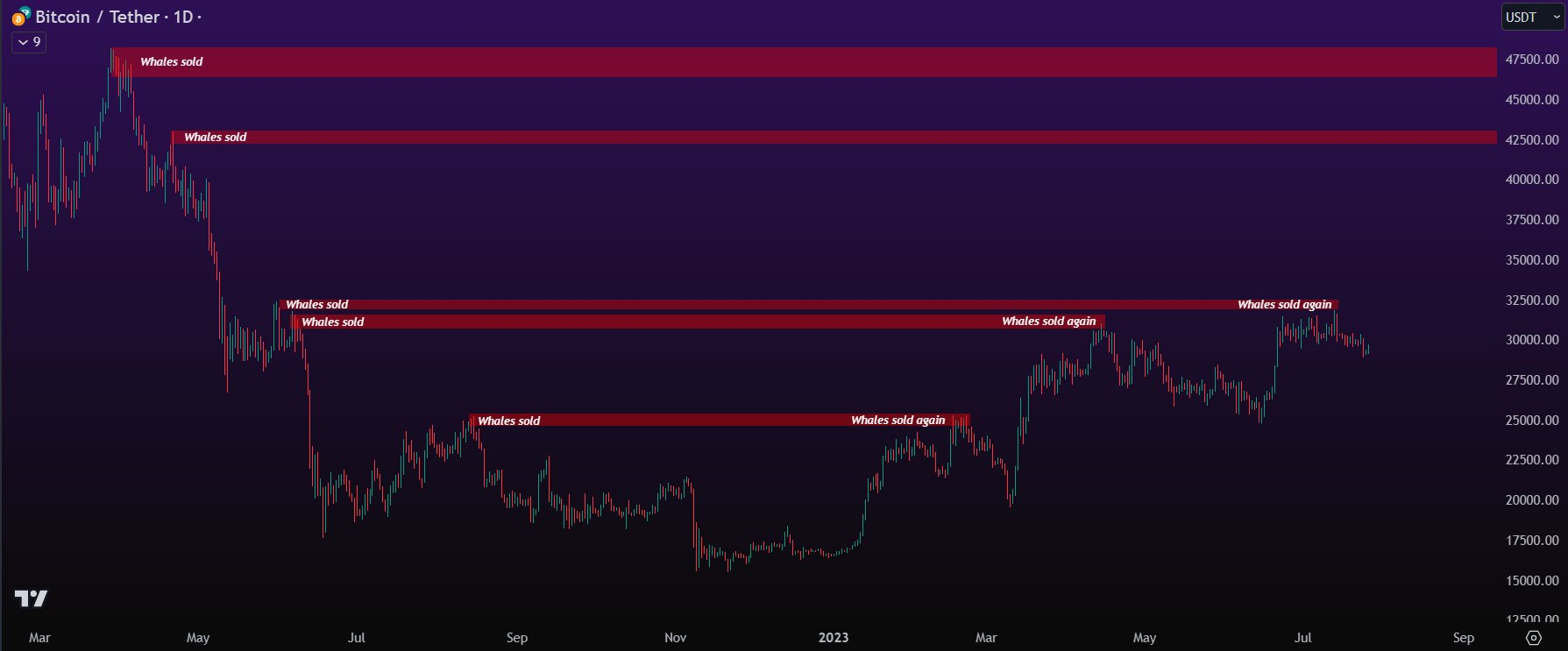
You can see in the example above: whales sell, and then sell again. Same level. They can't unload everything in one go because their orders are too large. So when price returns to those violent move levels — the ones that left HTF strong supply and demand zones behind — it will very likely reverse again. That's when you enter and ride the move alongside whales.
Whale Manipulation🐋 is the umbrella that everything in this lesson sits under. The Algos🐋 are the execution layer. The narratives are the camouflage. The news is the alibi. Decode all three and you start seeing the game for what it is.
Whales vs whales? No. Whales vs you.
A common cope in this space is "whales fight each other." It makes retail feel like collateral damage in some titan-clash they can passively benefit from.
It's not true.
There's no Billionaires vs Billionaires. They're not stupid. It's Billionaires vs Retail investors. None of them give a fuck about you or what happens to your family. They have their goals, and if you need to struggle for them to achieve those goals, you're just collateral damage for a greater good.
They sync-sell and sync-buy on the markets. No global event happens randomly. They work together. The illusion of conflict is part of the choreography — it gives retail something to root for, sides to pick, narratives to argue about on CT. Meanwhile the real flow is one direction: from your wallet to theirs.
Who are these whales that you typically monitor?
Multi-billion dollar trading bots owned by corporates like BlackRock, Vanguard, and more. They outsell and outbuy any amount of retail pressure. They're draining this 24/7 market daily while telling you to hold forever, so they can keep draining. When mainstream media says "whales bought" or "whales sold," it's their algos at work. When they say "bulls are taking over," it's an illusion. It's whales' multi-billion dollar trading algos during "buy program" chasing extreme premium of HTF range. When they say "bears are winning," it's the same algos in "sell program" chasing extreme discount of HTF range. See Buy & Sell Programs and 🔷Premium & Discount.
If you pay attention to the news on major moves, you'll notice there's nothing organic going on.
It's not about the chart being right. It's about what whales are painting on the charts to deceive retail newbie investors.
Think like a whale
If you want to avoid the trap they're placing, you need to brainstorm what their real intention is, because it isn't to make you rich. They want you poor.
So try to think like a whale. Try to think: how would you REKT society once again? How would you gaslight them all? How could you profit more while making them poorer?
This is the mental shift. Most retail traders ask "what should I buy?" The right question is "what would I want retail to do here if I were positioned the other way?" That single inversion changes everything. See Trade like Institutionals and 🐋Whale TA Analysis for the technical translation of this mindset.
If you were the biggest whale in the game, able to manipulate the markets as you please, knowing all retail investors expect a huge bullrun after halving — what would you do if your goal is to REKT them all?
If I was the biggest whale I'd trap the whales looking to trap the fish. Retail wants higher → whales try to trap them to lower → apex whale traps whales to higher.
Interesting, but whales don't trap whales. Their goal is retail's money while gaslighting the herd into thinking whales target other whales. They work together.
When you start making real money in trading, you begin to notice things — the subtle manipulations, the delayed fills, the convenient glitches, stop hunts, spoofing, sudden system overloads or "maintenance" when you're managing positions, intentional lag in candle closes to manipulate HTF signals, latency favoring insiders or bots especially during key breakouts. Fingerprints of a rigged game disguised as opportunity.
Exchanges move shady. Whales play silent. Most never see it because they're simply not profitable enough to reach the level where the game reveals itself.
The smartest trick: hunting your stop loss
MMs do all the textbook stuff — sweep highs, sweep lows, run liquidity. But above all they target the 🎁Hidden Liquidity Levels retail cannot see, because retail isn't experienced enough and there's no one at public knowledge level showing them what MMs can see and target on the charts.
There's a reason a handful of traders can catch falling knives often on micro 🔷Stop Loss while most are stopped out even though their stops are very wide.
We can go all technical and by-the-book, but it's as simple as this: 🎁Hidden Liquidity Levels and 🔷Fibonacci Levels do matter because billion-dollar trading bots are programmed with them, and respect them.
Most of what whales need to focus on is in ⛽️💡ing retail investors while extracting profits 24/7.
The above, along with many of my posts over the years, are the cheat-codes of this game, worth millions of dollars. Yet most people are too blind by greed and the next shiny object to even see it. Not everyone's meant to make it.
Algos are programmed with fibs
This is a recurring point and you need to internalize it: Algos are programmed with fibs, and negative fibs as well. It's a must tool and it's not a lagging indicator.
Bots begin reversing price at certain fib levels if paired with strong confluence, mostly on HTFs where all liquidity sits — candlesticks and imbalances. This confluence is not the lagging indicators on TradingView. Those indicators were created to keep retail blind to the real craft.
In short: institutional trading bots are programmed with fibs, so mastering them is a must — but definitely not how retail uses them. See 🌊Liquidity (+Wicks) and 🔷Fibonacci Levels.
Algos look at where liquidity sits and, similar to a snooker player, plan several moves ahead. The more moves ahead you can brainstorm, the more successful you'll become in this game. Have Multiple Plans📄
What you actually need to focus on
If algos account for at least 75% of all trading, what should you learn? Not RSI crossovers and triangle patterns. The real toolkit:
🔹 Fibs, Wyckoff Method, 🎁Supply & Demand, FVGs (imbalances), Ranges, ♨️Key Levels🗝️ (high confluence).
That's the list. Everything else is noise designed to keep you busy while liquidity is extracted from your account.
It applies to coins of all sizes
That applies to a coin like TRUMP in the example you recently gave too? It's the algos of the big players even in these coins with much lower market cap?
Large caps owned by institutions, politicians, and big heads — yes, algos. Small caps can also run on algos but with more "erratic" PA because they're easier to move, which is why you can often find larps getting their scam network to pump-and-dump them.
Before the big financial corps were involved was it the large exchanges doing the same? Like Binance?
Yes, it was Binance and other large exchanges. It's algorithmic trading epoch, and it's all planned. News are always released to serve as the excuse for significant moves so retail has something to point fingers at. All manipulated. Scripted. Whales vs the people, rather than Whales vs whales as many think — apart from CZ vs SBF back in 2022.
Here's an example on $SUI:
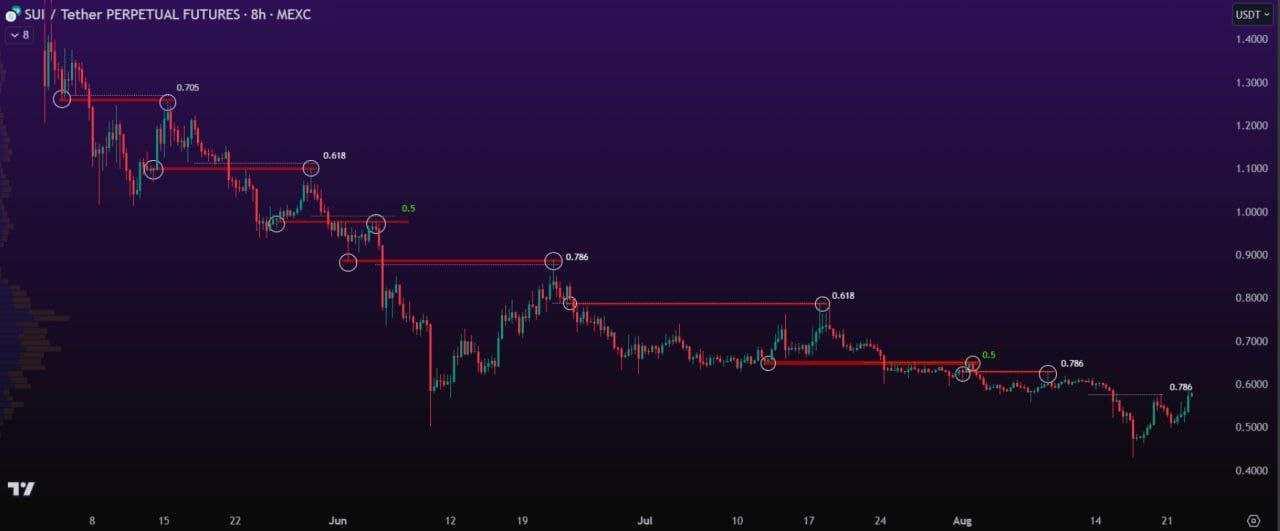
It also applies to coins that don't have futures?
Yes. Just the lower the liquidity on the coin, the more "erratic" the PA will be.
And on $SPACE, when there was no leveraged trading yet — liquidity coming purely from limit buys at the level:
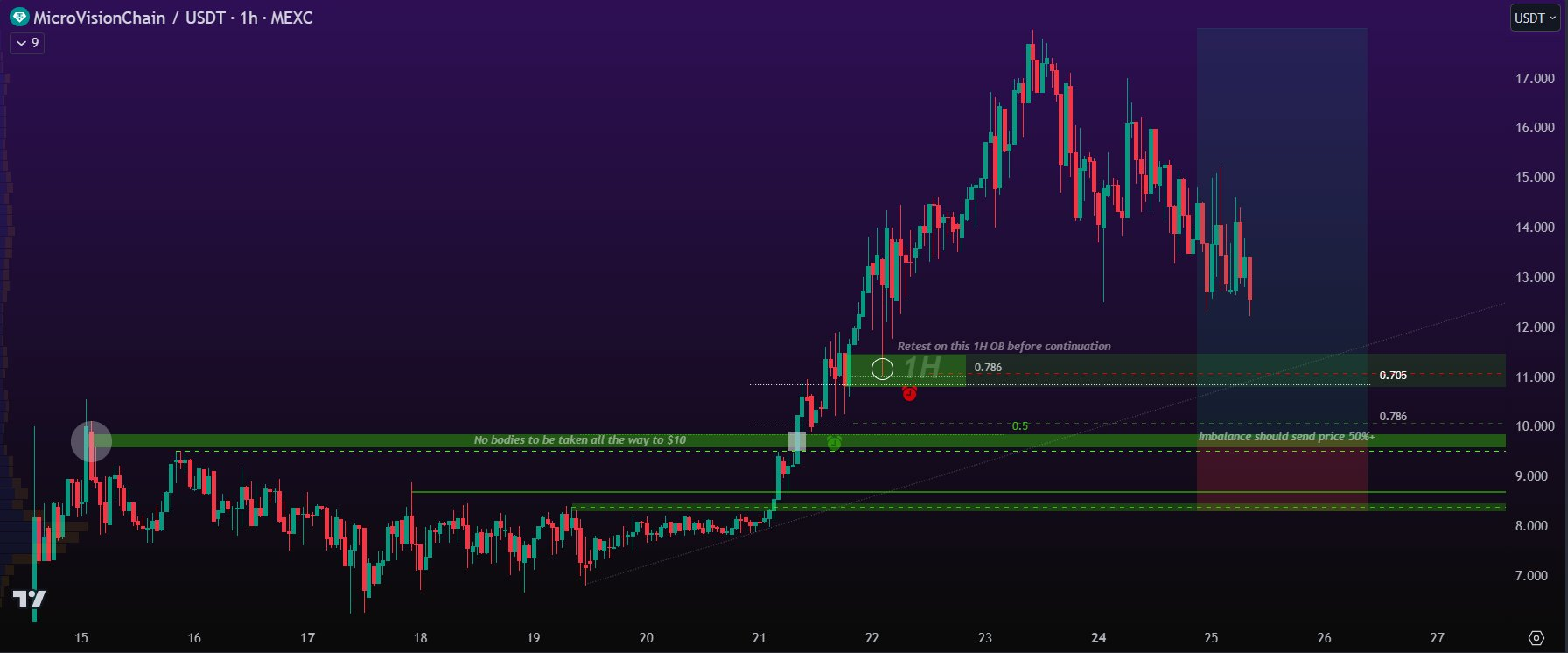
Trading bots can be programmed to identify and respect OBs in spot trading just as they do in futures. They analyze historical PA and identify key support/resistance. If a bot follows a trend-following strategy, it may wait for price to approach an OB before initiating a trade in the direction of the HTF trend.
News is the alibi, not the cause
This is one of the most important reframings in the entire curriculum, and it's the hardest for new students to swallow.
News doesn't move the market. The market moves the news.
At ♨️ HTF supply levels, whales will release max FOMO news. At HTF demand levels, whales will release max FUD news. So retail panic-buys when whales are ready to dump, and panic-sells when whales are ready to buy. Whales then reverse sentiment because they fully control what retail does.
When you learn to read important charts properly — the ones with most MMs' footprints — you'll see that major FUD news (or FOMO news) almost always happens at key levels of liquidity, leading to price reversals.
There are billions of dollars to liquidate. Don't be surprised when one day you find out, whether pleasing or not, that this is all truly a "matrix." Adapt, and don't be blind as most people out there.
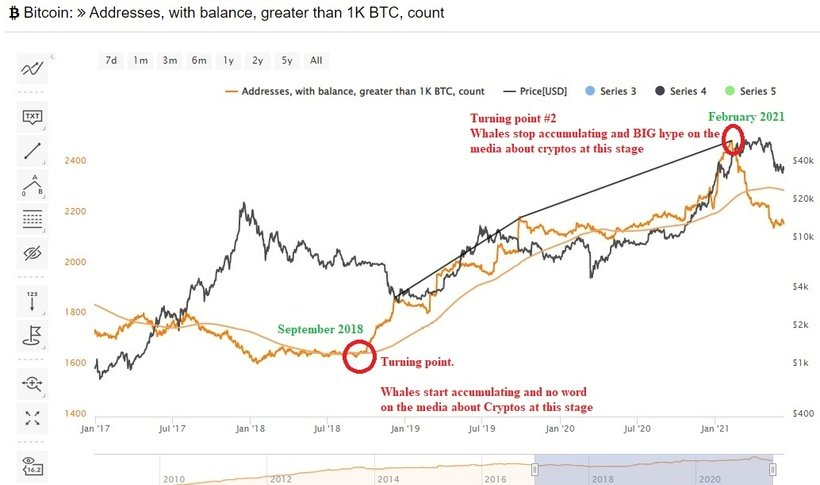
Look at this loop:
Pump it a bit → Wait for the new ones to buy → Pump it a bit → Wait for more newbies to buy → Dump on them → Pretend BTC is banned in the US → Dump it more → Freeze all exchanges → Find a bottom and bounce +25% → Re-open exchanges → Bear market is over.
That's the script. It just gets re-skinned with whatever this cycle's narratives are.
A clear example: the "ETF approval" wick
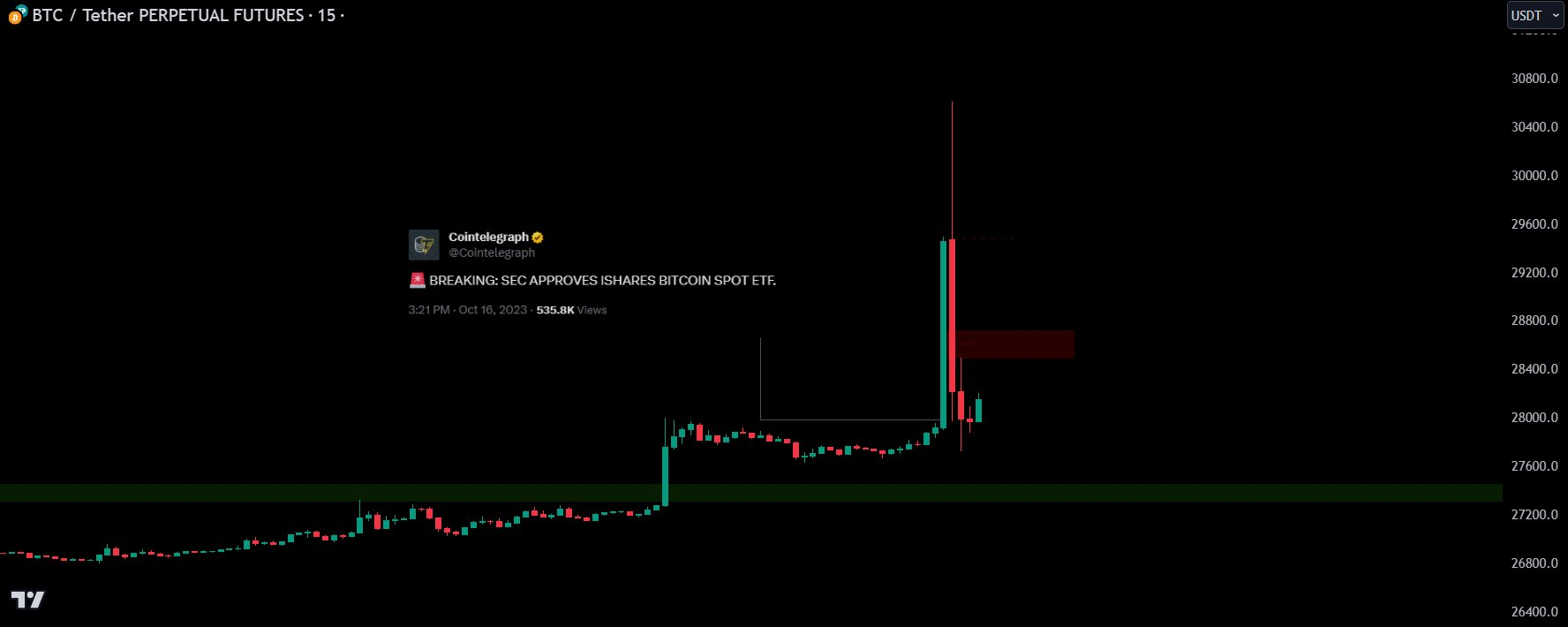
It was a blatant scam. Why? Clearly it was SL/liquidations hunting. Whales need excuses like "Spot BTC ETH approval" to explain the most aggressive moves. For an asset like Bitcoin, it must be big news to move price significantly; for small cap cryptocurrencies, a "hack" will do.
Retail cannot print these candles — there's not enough buying power. This is whales manipulating the news for their own benefit. They liquidated millions of dollars of shorts, and there's always retail chasing the most aggressive moves, so more gains for the big boys. They control the media.
3… 2… 1… back to the mean like nothing happened. News are false but the dollar transfer is real.
The same pattern, over and over
Once you internalize this, you'll see it everywhere. Every aggressive reversal. Every viral headline that "explains" the move after the fact. The pattern is so consistent it stops feeling like coincidence and starts feeling like reading a script.
If you actually took the time to sit down and list:
- Every aggressive reversal on Bitcoin and ETH
- The news that magically appeared to explain each one after the fact
- What major charts were signaling before it happened
- What the biggest whales were saying publicly around that time
- And the overly bullish news that always seems to drop right at the top
You'd start noticing something most never do: this game is rigged.
Sure, lots of people say it's rigged. They repeat the phrase like it makes them sound sharp. But ask them how it's rigged, and they go silent. They can't point to the timing of narratives, the structure of price action, the coordinated influence of whales, or the mechanics of how fear and greed are weaponized — because they don't actually understand the game. They just know they're losing and need a reason.
The markets you're participating in are one of the most beautifully engineered scams ever created.
- News doesn't move the market. The market moves the news.
- Narratives are built.
- Reversals are planned.
- Retail emotions are manipulated on schedule.
- Whales accumulate when everyone's scared.
- Whales distribute when everyone's euphoric.
- The headlines are timed.
- The influencers are bait.
- The majority are just exit liquidity.
The illusion is precise. Elegant, even. Designed so that by the time you think you understand what's going on, you're already on the wrong side of the trade. If it ever feels obvious in hindsight — that's the point. It was obvious. Just not to you. Once you see it, you can't unsee it. You stop reacting like the herd and start thinking like the architect.
How Distribution looks on the chart
Whales can't dump everything at one price. So when you see two ⚡ aggressive drops at the same level, that's whales' intention to sell at that level. Probabilistically, price is likely to crash from there on any next hit, as it does most of the time.
Market makes sure you're not bullish here. Sentiment is pretty bad. The truth is that 72k was knocked now several times on BTC. It can't hold forever.
Each touch had an aggressive drop, and that wasn't retail investors selling. Distribution in play while bullish news is released on a daily basis. The hint for whales' intention to push higher would be candle bodies closing above the range's swing highs — not just wicks.
Whale footprints
If you find more coins with these whales' "footprint" setups on the Daily chart (the minimum TF institutional traders use), don't be surprised if you eventually begin being able to forecast major news release before they happen.
🎁 Whenever you see this formation — Distribution / 🔷H&S and 3 Drives — combined with a Demand base below, you'll be right more often than not if you're bullish on the coin. This is a classic Market Maker Distribution pattern, hit to a very significant liquidity level, and 🚀.
You can backtest these. They're clear MMs footprints; in some plays they have no chance to hide their intentions. The R:R is excellent, and it works for spot traders too.
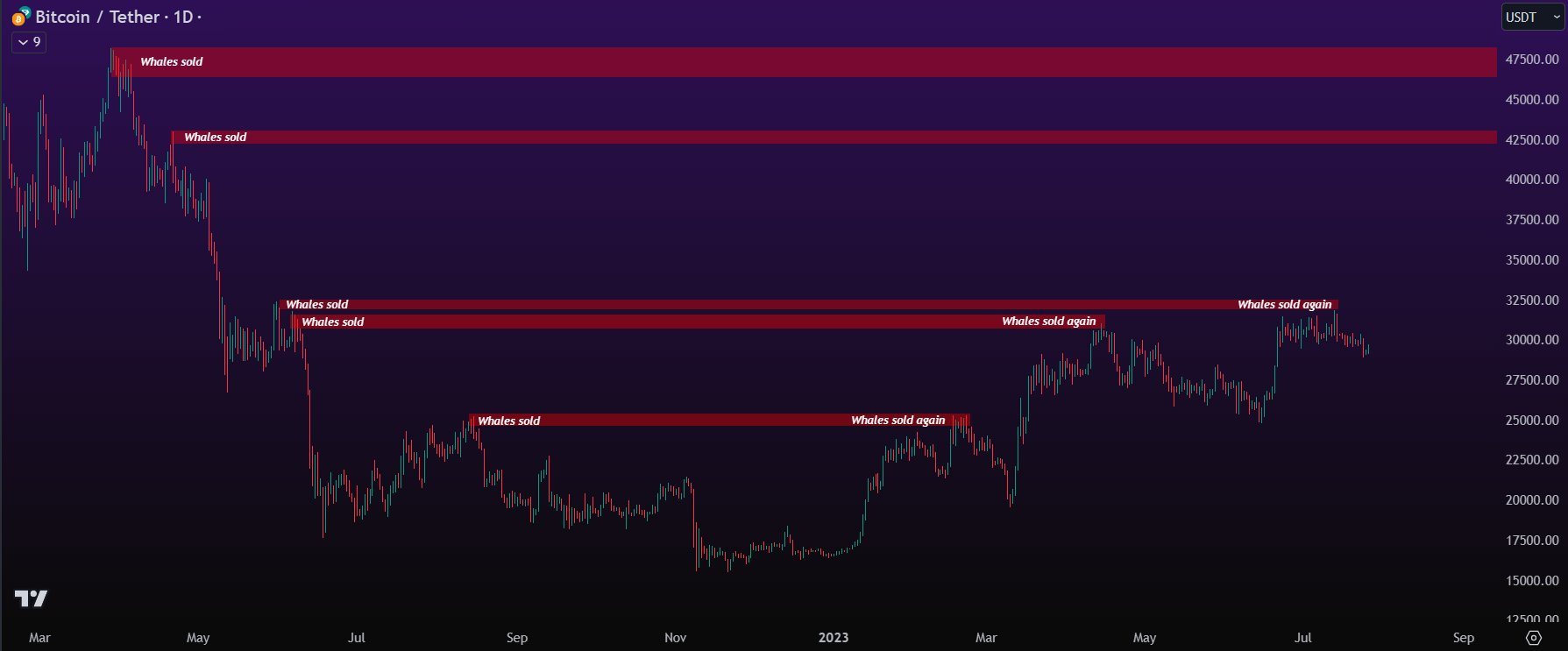
Bitcoin's simplest cheat-code: get to the higher levels and FOMO like most fools, and you'll be crying shortly after. Be smarter than the herd. They will FOMO at ♨️ levels, and whales will release max FUD. Me: 🍿🎥. See ❗ BTC Rules.
You can identify Tops vs Bottoms (Bull vs Bear) with this information. This is not all you need, but you'll be much ahead of most Retail🧠 investors and able to identify ♨️ levels on the charts, as well as ♨️ levels in sentiment via the "euphoria" shown on Crypto X.
MATIC — textbook example
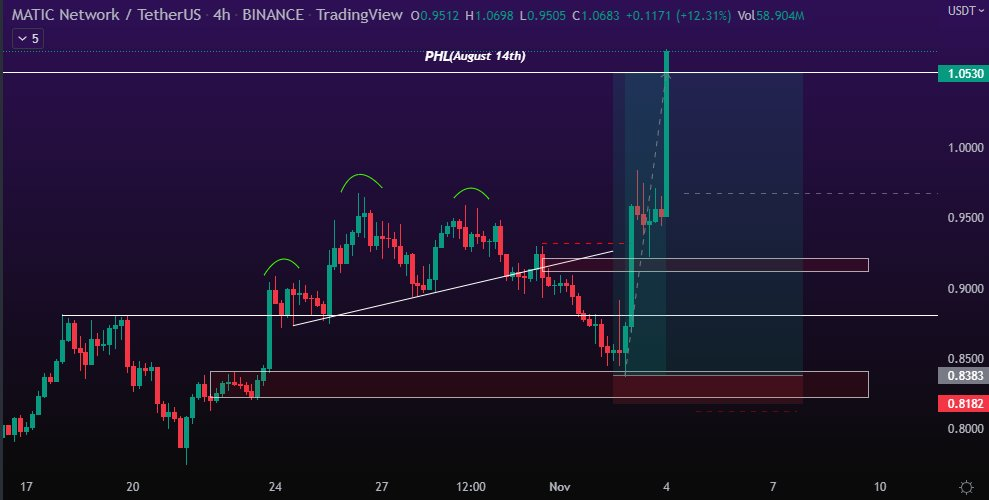
Always have at least 2 take profit levels. Whenever you see the Distribution / H&S formation with a Demand base below, you'll be right more often than not if you're bullish on the coin.
APT — bullish news appears right on cue
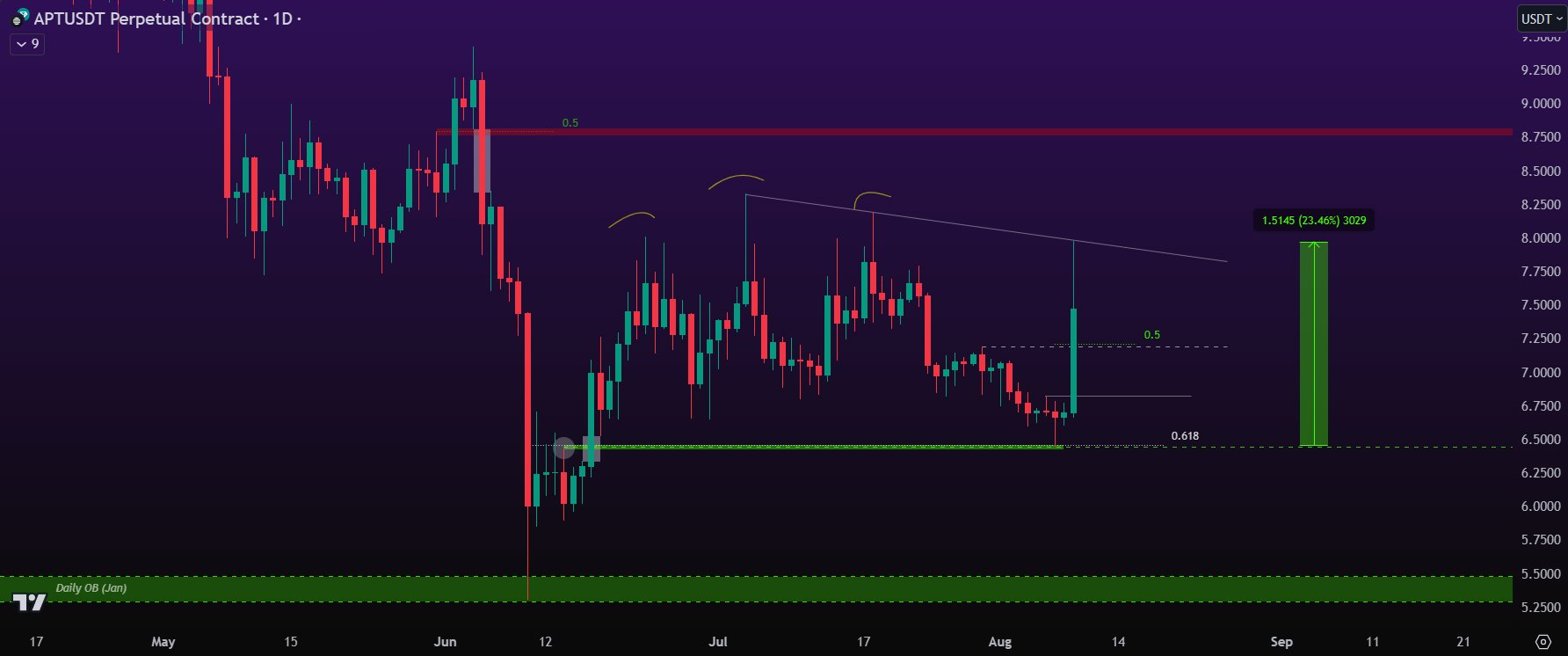
Bullish news "randomly" made public as soon as one of the only two PA whales' footprints was confirmed.
Reversal coordination
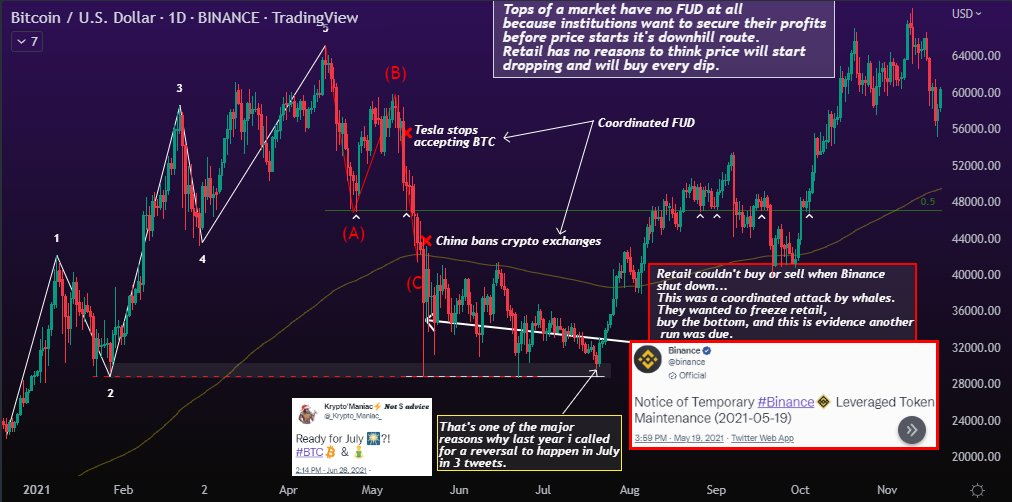
There won't be any bullish news once a reversal kicks in. Retail will be very fearful, believing it'll be another failed rally. Stay in the game and you'll catch the bottom. The chart above is proof of how whales coordinate to buy low and sell high.
They see you
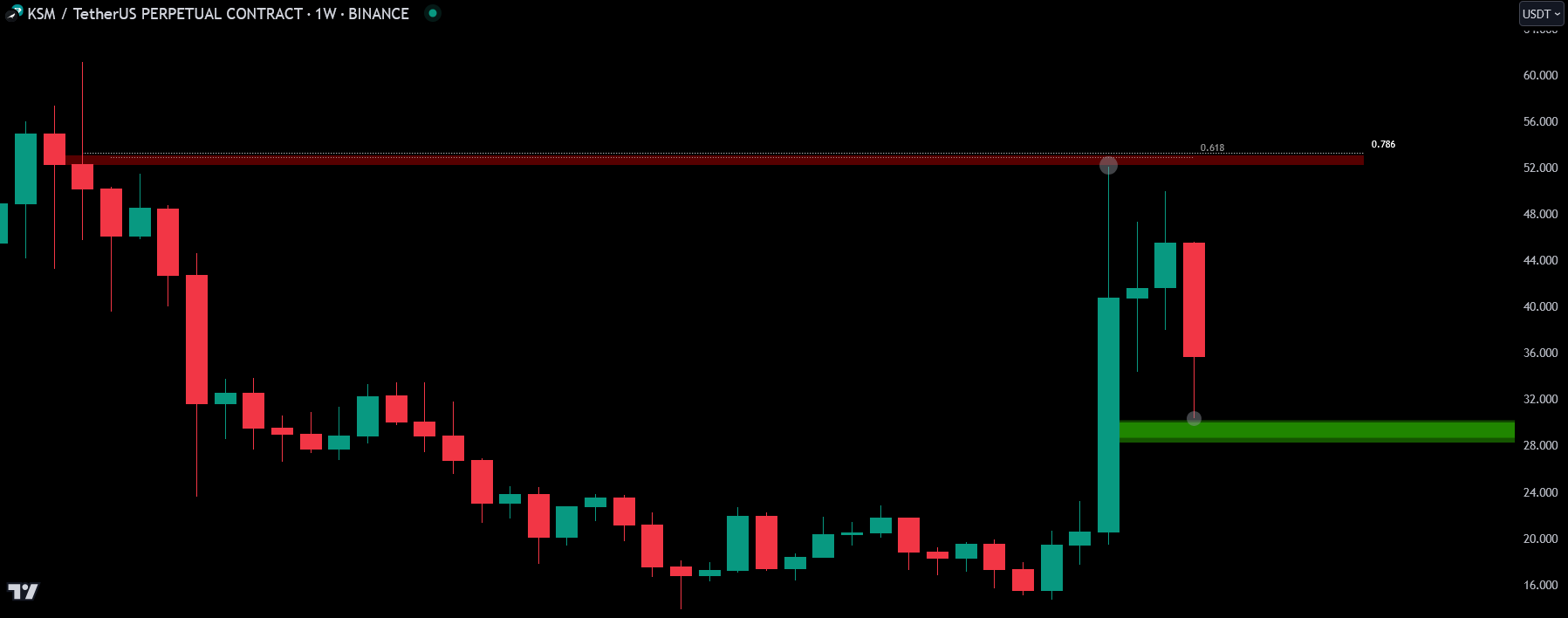
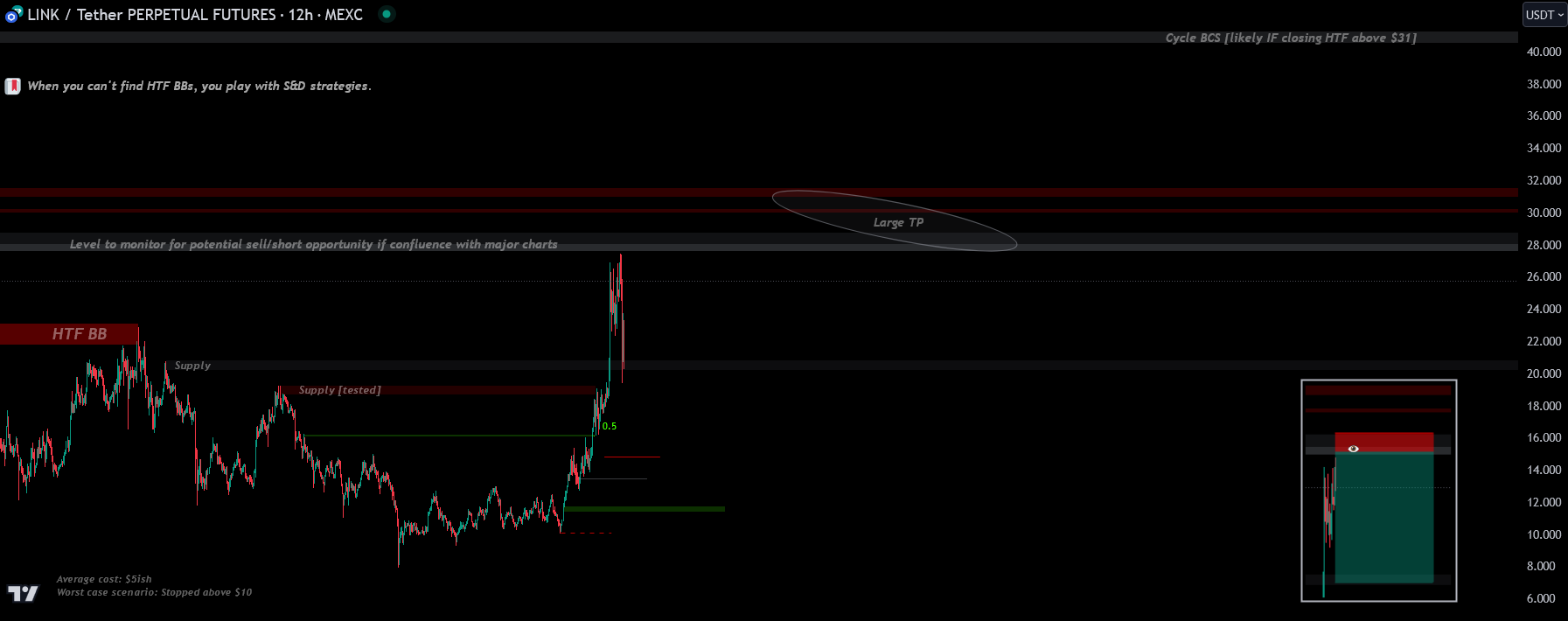
Is this their way of adapting strategies to front-run those who are catching on?
Missed out on 4 trades by a hair. Stopped out on 2. Hit 8 perfect entries. Algos🐋 also play against the most experienced traders. It's normal PA. See Getting Frontrunned.
Narratives: the camouflage layer
If algos are the execution layer, Narratives are the camouflage. Whales build beliefs and narratives, and the longer they let those narratives run, the more people join as believers. Eventually, when most are taking decisions based on "what happens all the time" and "consensus," it does a 180°.
Whales enter your mind and drop an idea or belief without you noticing. This goes on for a while because mind manipulation is a process that takes time.
Examples of narratives I've watched be deployed and then weaponized:
- The Saylor "always-bullish" indicator
- The Jim Cramer counter-trade indicator
- The moon phases / blood moon thesis
- The "Bitcoin Reserve" narrative
- "ETF approval = up only"
- The halving bullrun expectation
It's not the moon moving the markets — it's the collective belief in its power that sways outcomes. Eventually accuracy subsides, believers enter denial, and they begin a Death Spirals-style descent while assuming it's just a one-off mistake.
Always assess carefully when an opinion is already consensus and what seems most logical. Don't follow the herd.
Narrative validation before wreckage
This is the mechanic to memorize: whales validate a narrative just enough before they reverse it.
Bitcoin Pizza day in 4 weeks. Most likely 🔄🧠 to play out. Need more info from the usual suspects so I can refine probabilities. Narrative validation is something whales do often.
- If I come up with 75% or more probability for downside, the most likely move is a pump into a key level, then aggressive drop.
- If I come up with 75% or more probability for upside, the most likely move is a drop into a key level, then aggressive pump.
Look closely and you'll notice there's always a trap. The longer it delays, the stronger the herd's conviction becomes. Every pump that doesn't reverse aggressively is taken as proof they were right all along. The herd grows louder. Confidence turns into certainty. That's when the trap is fully set. Then comes the rug. Not by accident, but by design.
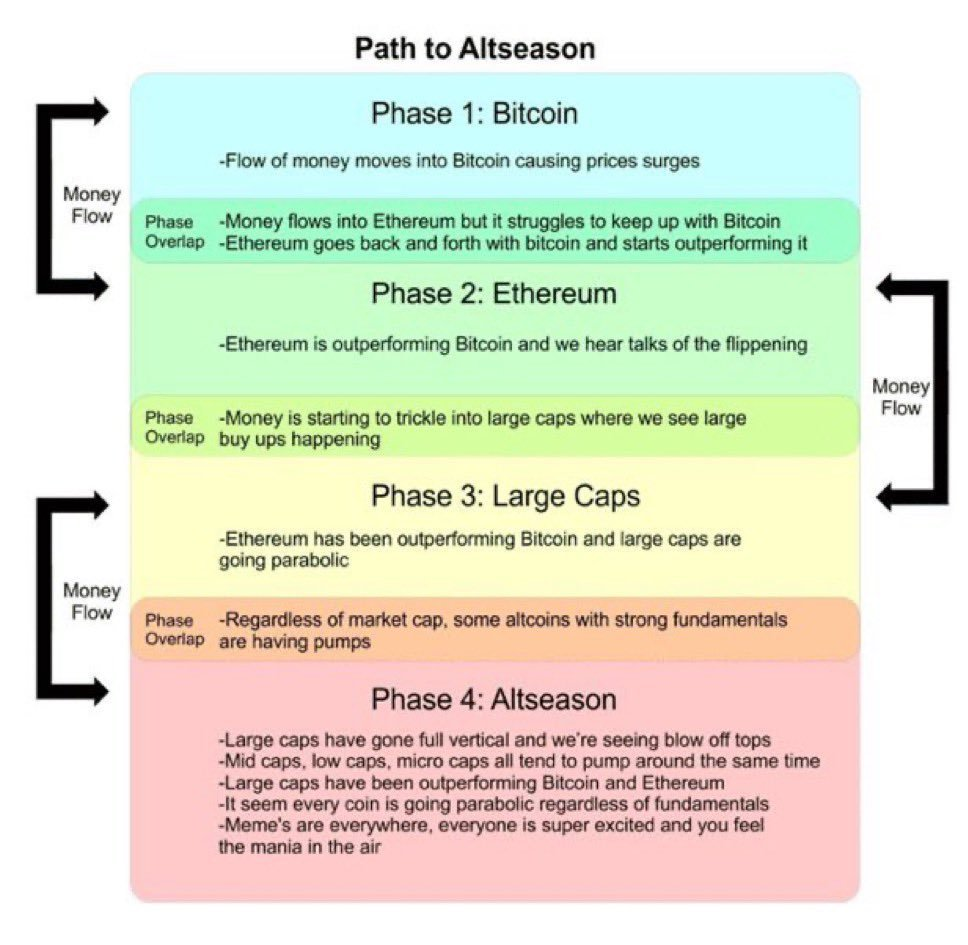
Whales won't initiate a "Valhalla-style" nuke where the entire board collapses at once. That would be too obvious, too inefficient. Instead they'll dismantle the market narrative by narrative, with precision. They've gathered the data. They know where crypto investors are positioned. They'll crush one sector first, forcing holders to panic-rotate into whatever is still pumping, desperately chasing new narratives to recover losses. That very rotation becomes exit liquidity for the whales who positioned earlier.
The macro engineering
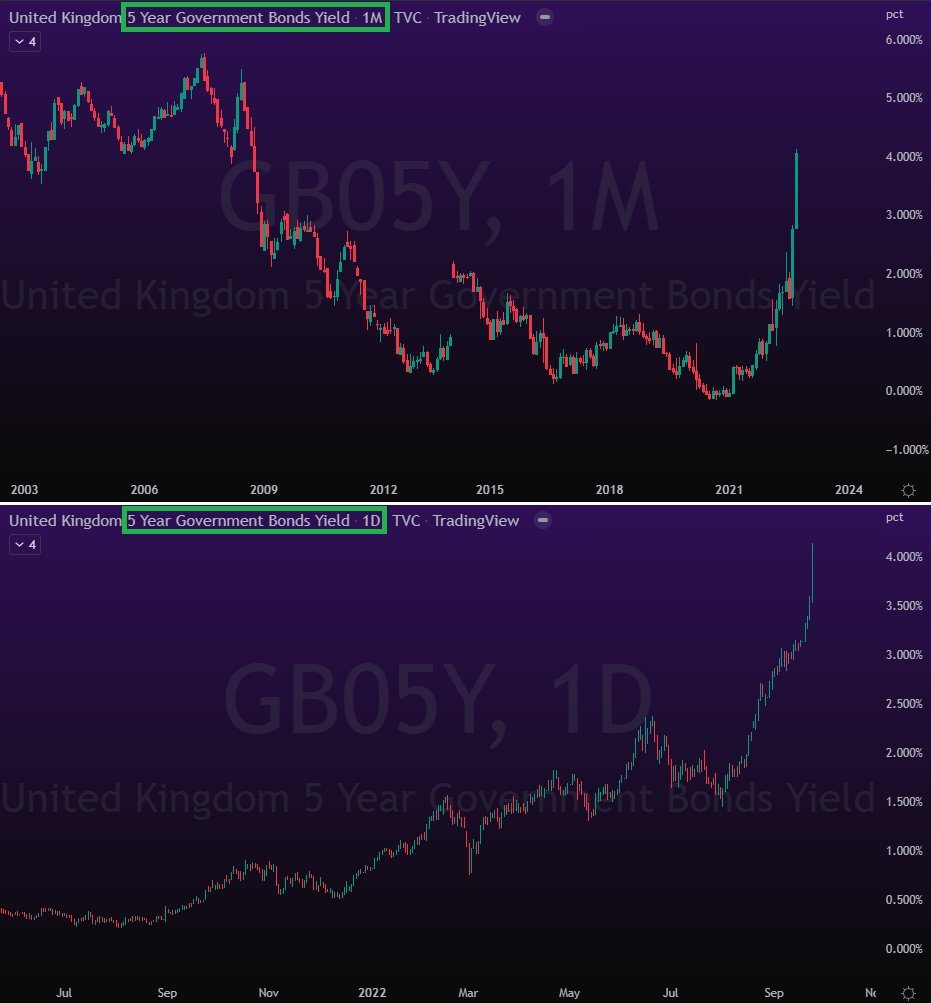
Currencies collapsing vs USD while the narrative was "the dollar is collapsing." The FED deliberately crashing markets. See Inflation, FED Reserve, Recession, Market Cycle.
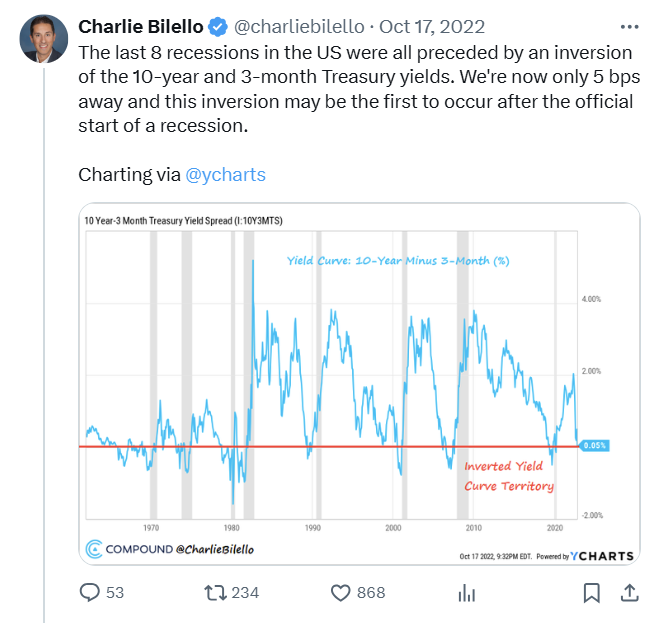
When info is too mainstream, it usually plays out different. Too mainstream = high probability of inversion.
The Bitcoin Reserve narrative
It's beyond obvious that the Bitcoin Reserve narrative is a major trap. It'll mark either a local top or a macro top, leaving investors wrecked as they buy every dead-cat bounce — because, well… "the Bitcoin Reserve." This narrative will keep the majority of investors holding, and the outcome is clear: round-trippers.
It's the same scam narrative every cycle, designed to keep investors from selling, paralyzed by fear of missing out on "the biggest run ever." Same script, different players. People fell for every single trap — halving, ETFs, inauguration. The crazy part is these traps weren't even hard to spot, but greed and ego blinds the fool.
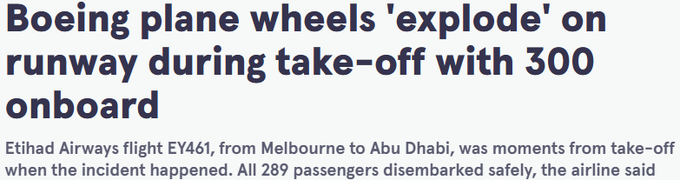
Forbes "would" headline
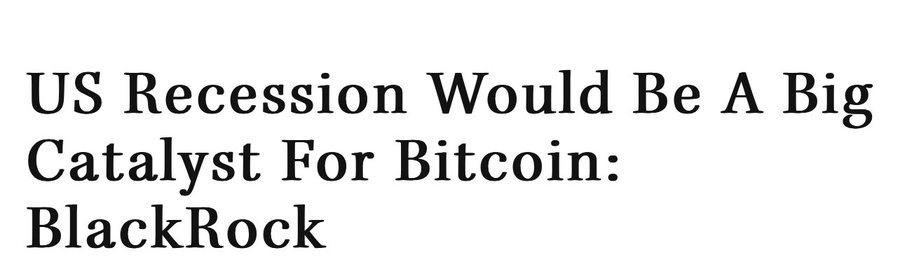
At least we know it'll be a bull trap to validate this narrative and wreck the herd after some "gains." The use of the word "would" isn't random. It implies potential, contingency, and timing not yet active. Details matter.
Saylor again
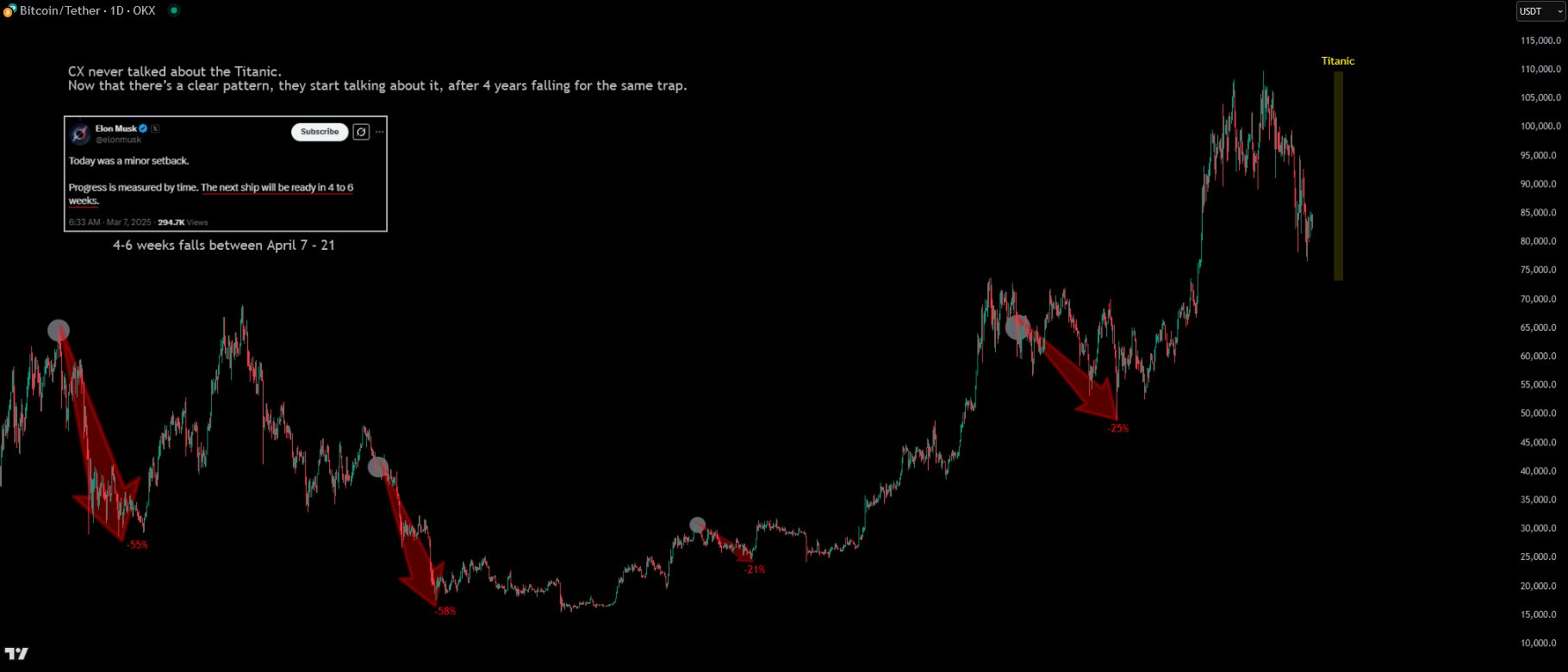
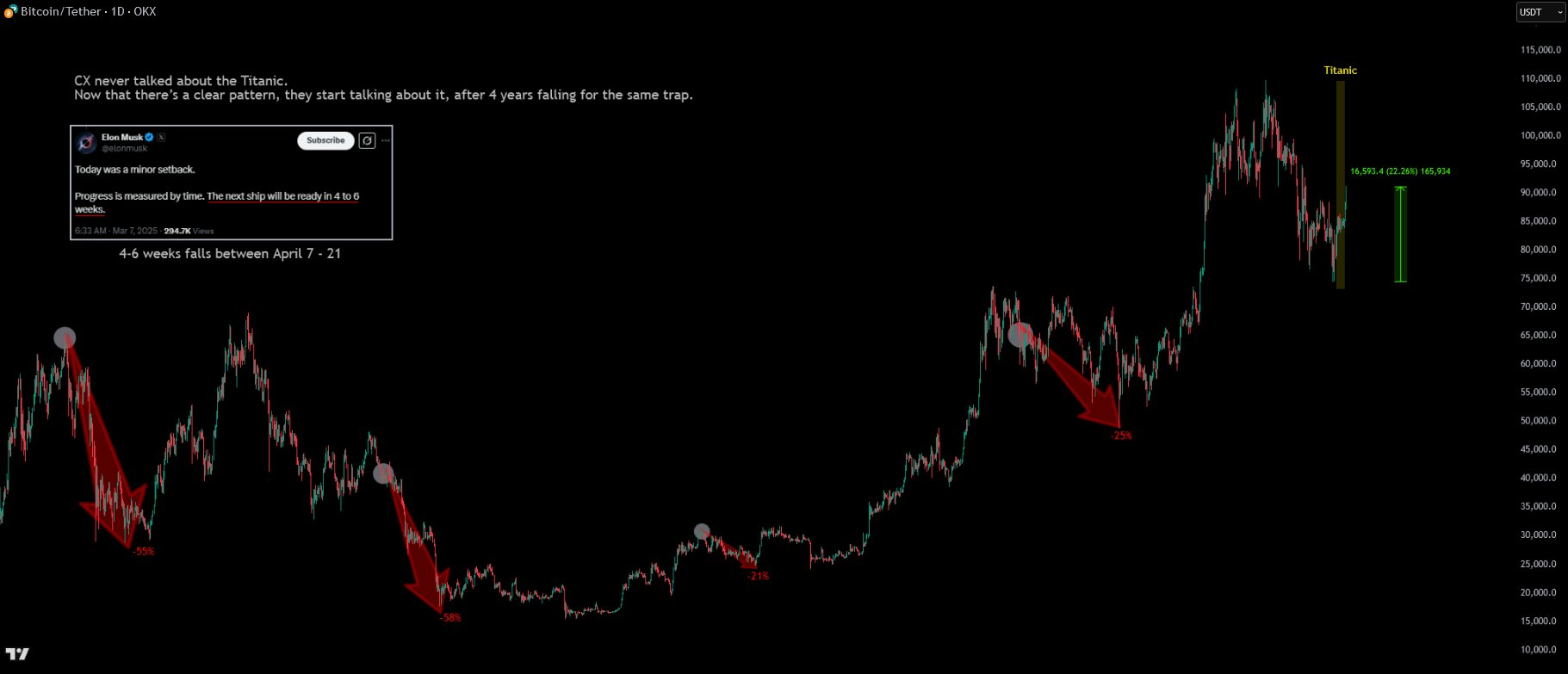
The Saylor FUD and exchange withdrawal freezes were more confirmation of a reversal. Two major indicators worth watching.
Trump pre-announces
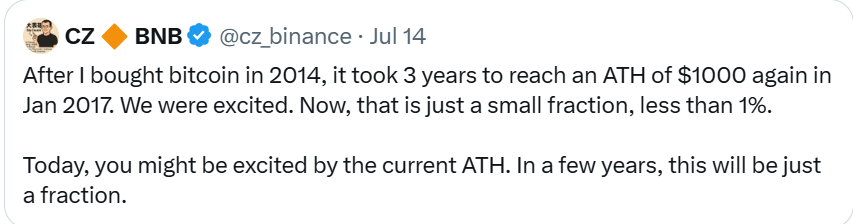
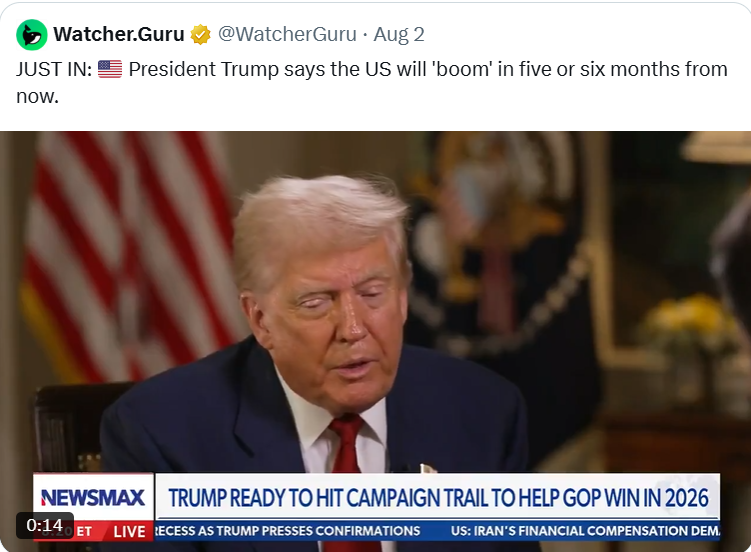
Very kind of Trump to 🎁 us a timeline range. Job's to refine it and play alongside whales. Reminder: narrative validation before wreckage.
A gallery of choreographed moves
Below is a sampling of the public-facing layer of the game — the announcements, the deletions, the convenient timings. You're not meant to react to these one-by-one. You're meant to see the pattern of them so you stop being surprised by individual instances.
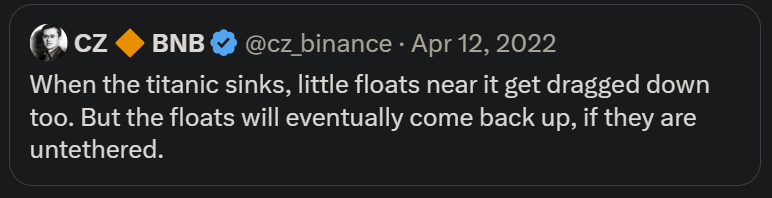
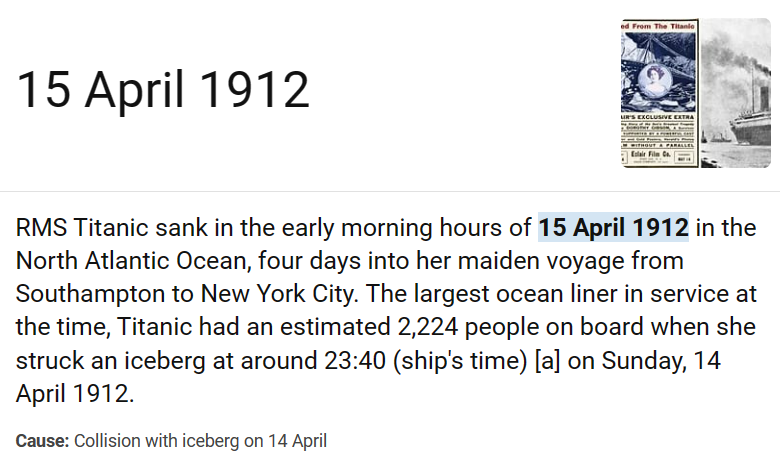
They know, and toy with the world. Want more?
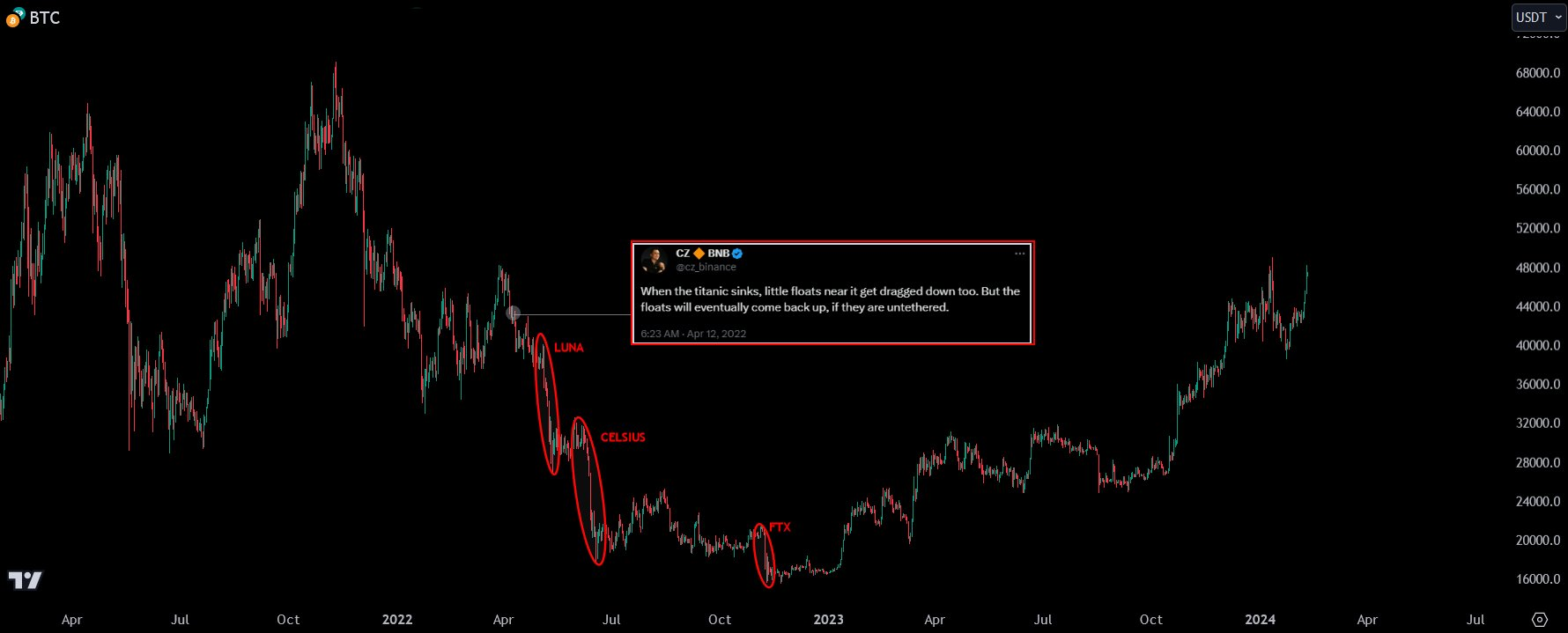
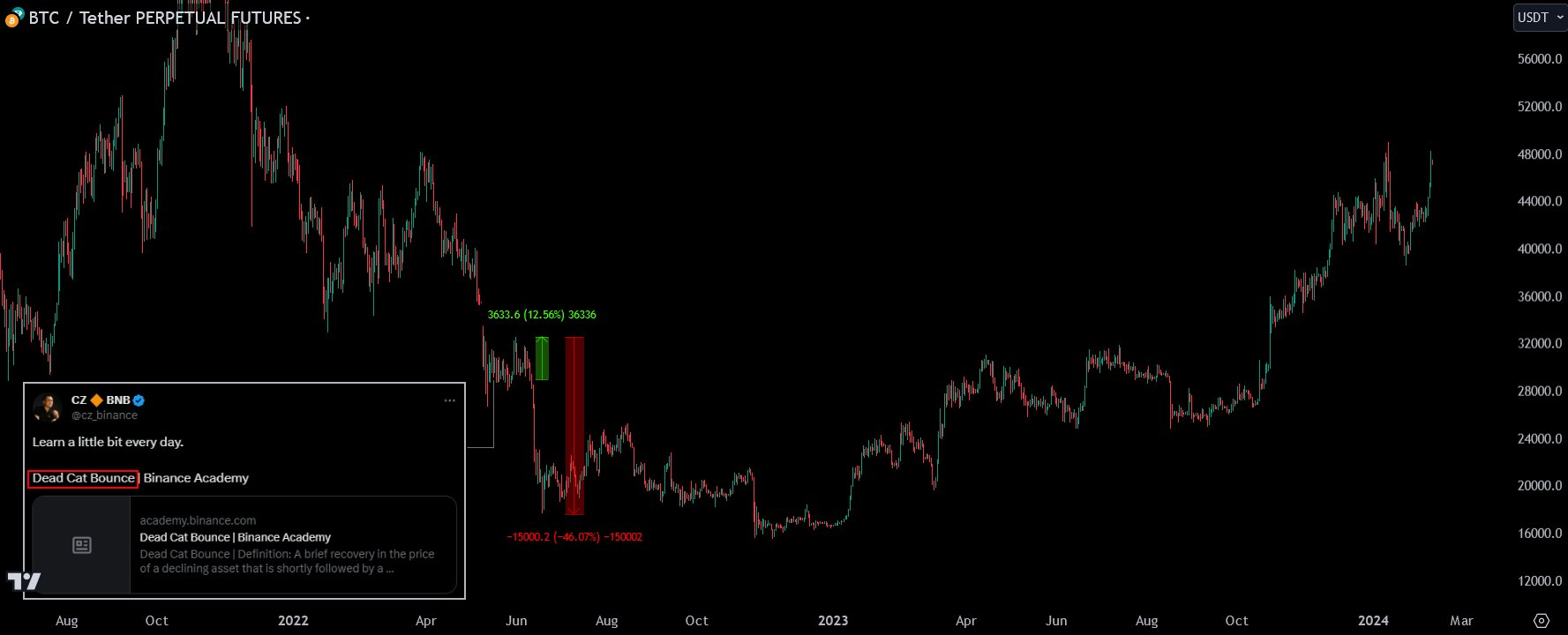
CZ tweet (quickly deleted) right on top of market reversal from bear into bull market:

Look at what they do, not what they say:
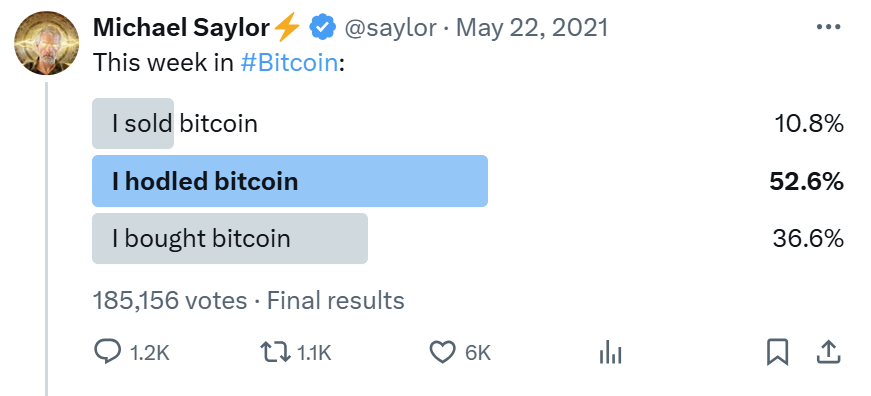
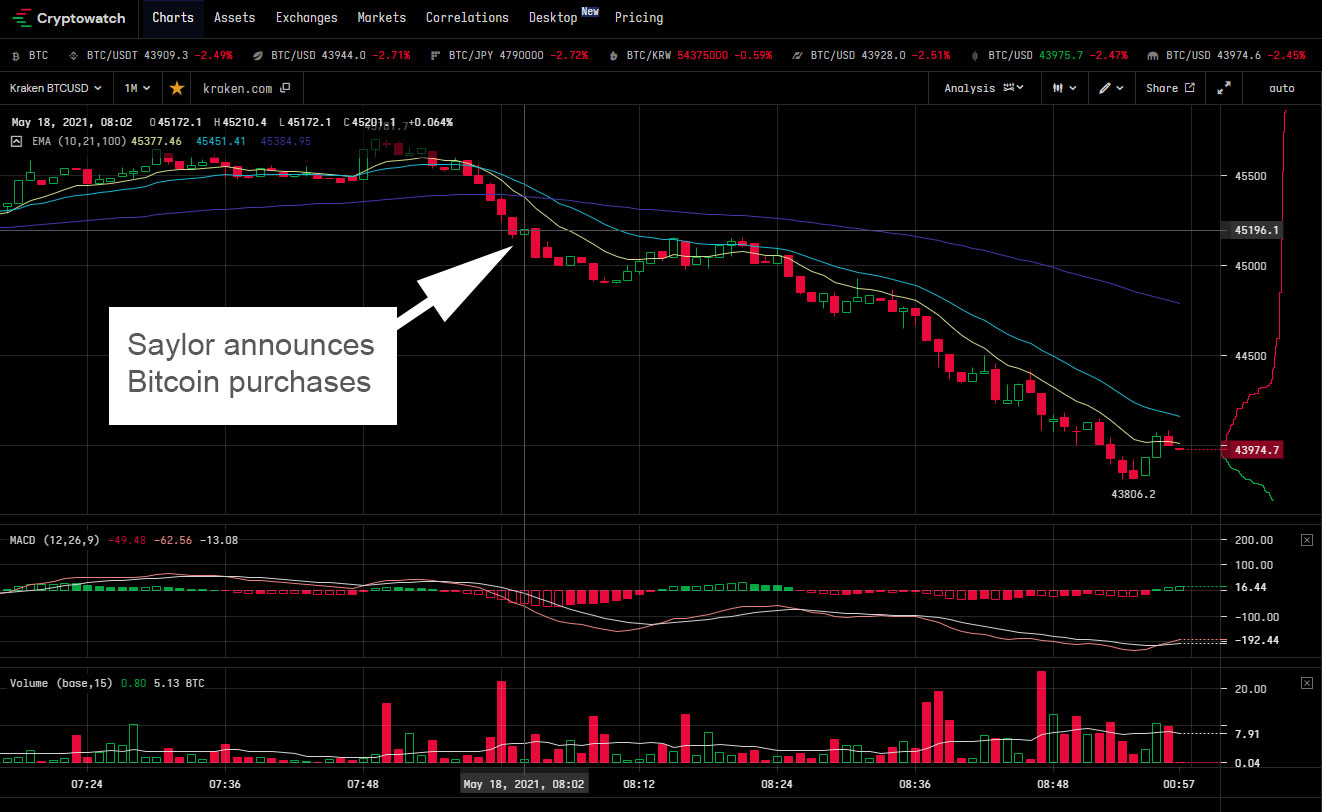
What I read on this one: "We bought enough Bitcoin. Let it 🚀🚀."
The 0.1+ BTC addresses going heavy after the latest 69k top — clearly influenced by bigger players and the "buy the dip" narrative:
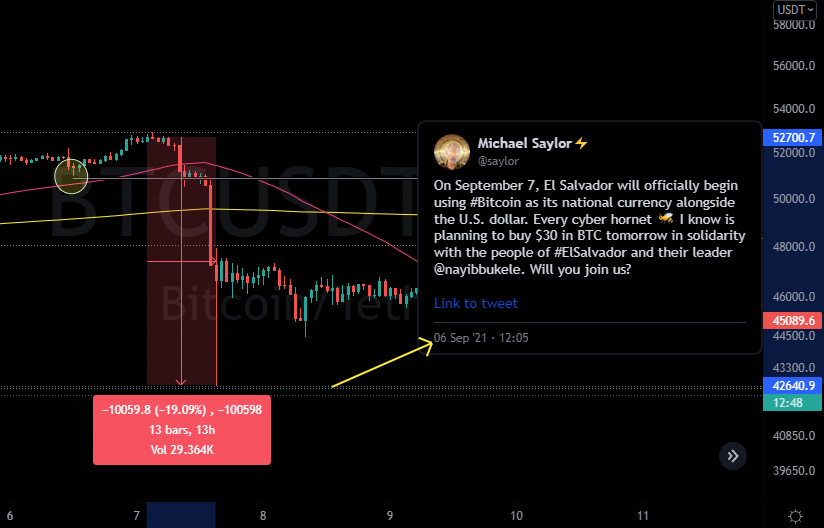
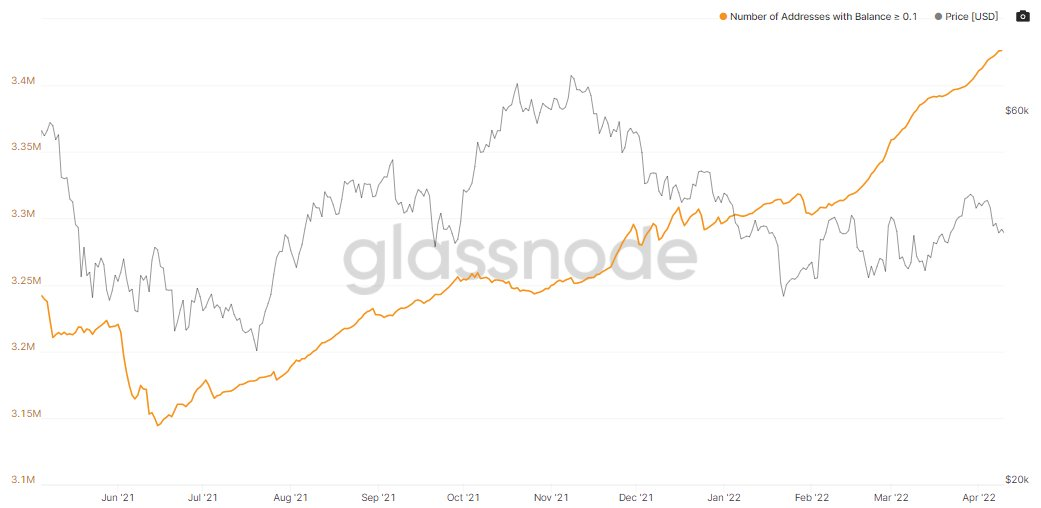
🐳s make retail buy to maintain price levels as much as possible while they take profits. Then they release FUD, retail starts selling, and they buy back what retail sells, keeping PA on the same levels. Rinse, repeat.
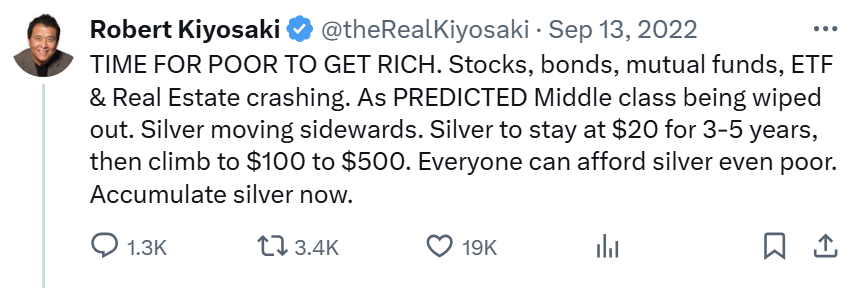
Don't fill these guys' pockets just because they wrote a 📖. Get educated and take more risks once you understand what you're getting into.
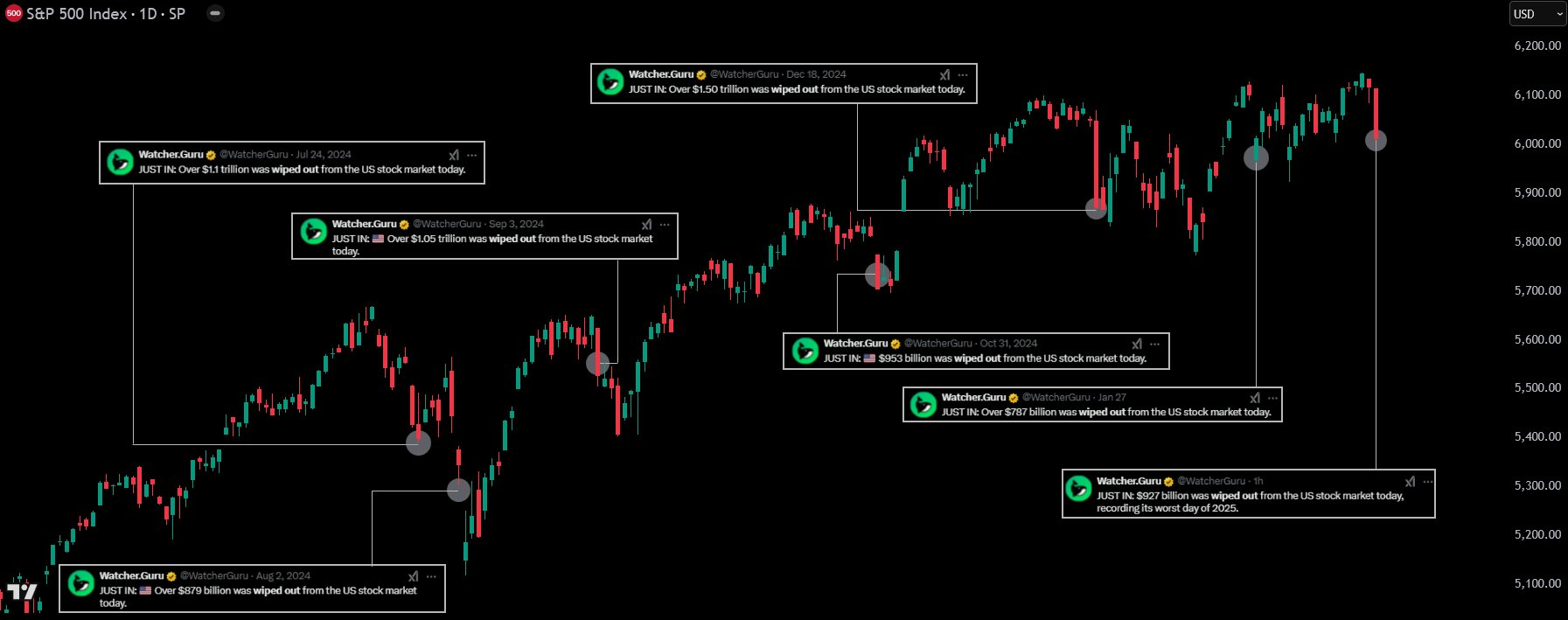
"Let's drain just a bit, like a trillion"
Saylor indicator:
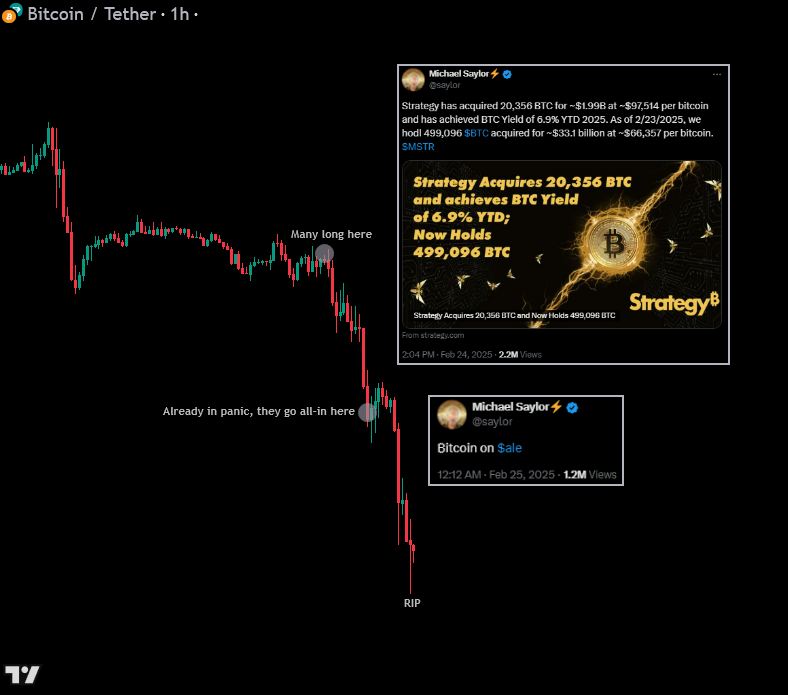
How many billions liquidated after this bull post from "the retail investor's best friend in Cryptoland"?
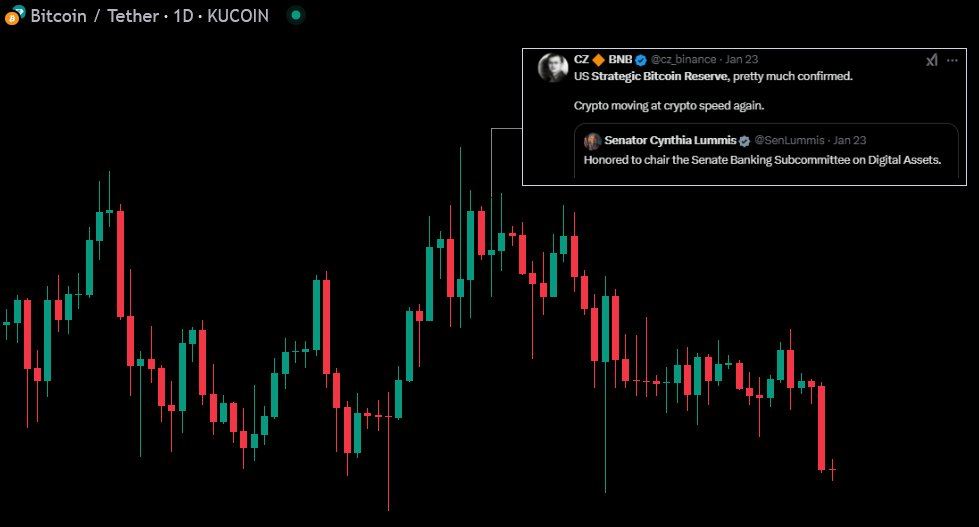
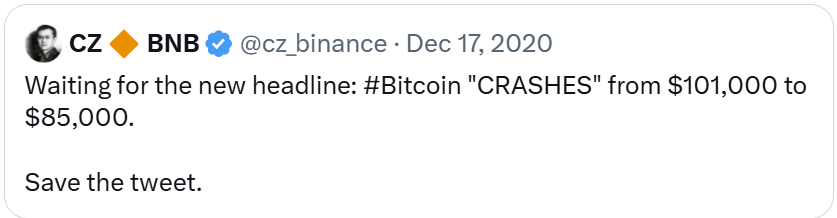
Those "random" predictions:
Trump pumpin' and dumpin' cryptos while everyone's too busy drooling over short-term green candles to notice they're getting screwed. Sunday announcement was the red flag — dates given, exact time:
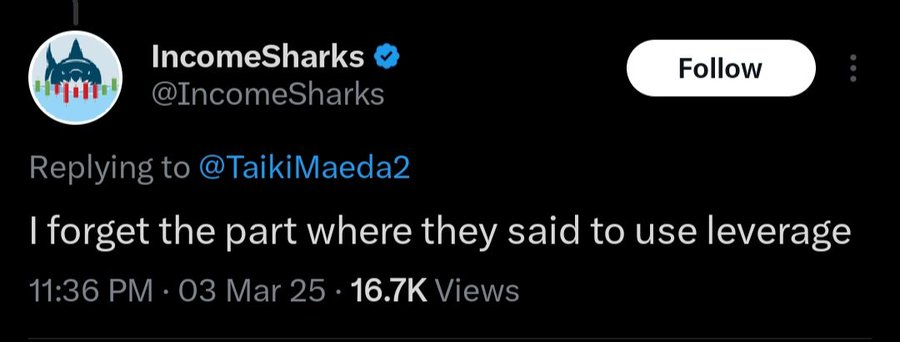
"Big dip" preparation — note the "if" framing:

So it's like reverse psychology? Trying to get people to sell now to avoid the dip?
If you think through the why hard enough you might find the right answer and gain from it.
Trump on Bitcoin
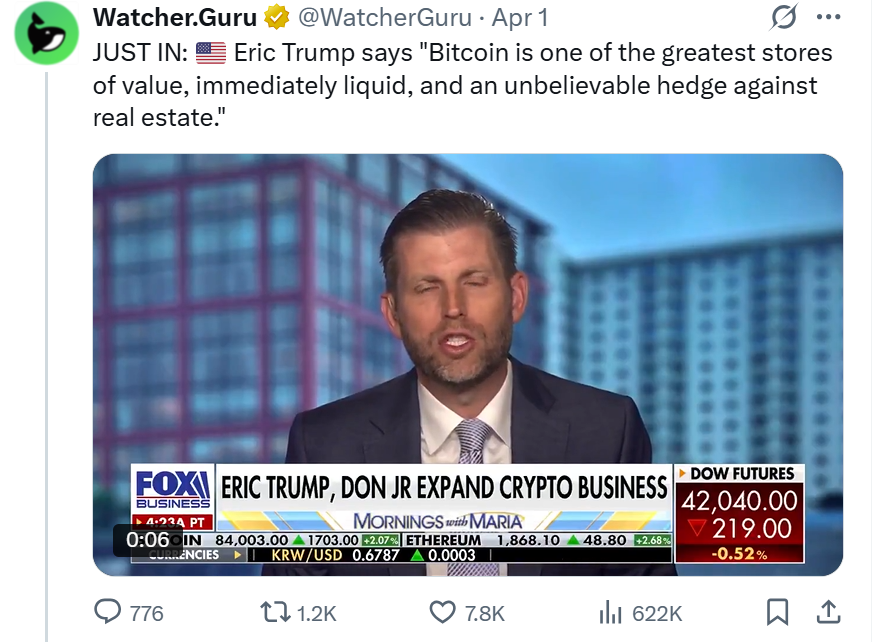
"And and and and… I truly believe Bitcoin is one of the greatest stores of value." Maybe ask your daddy to teach you how to lie like a pro.
Wynn / Elon / Trump scapegoats

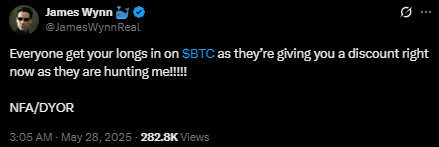
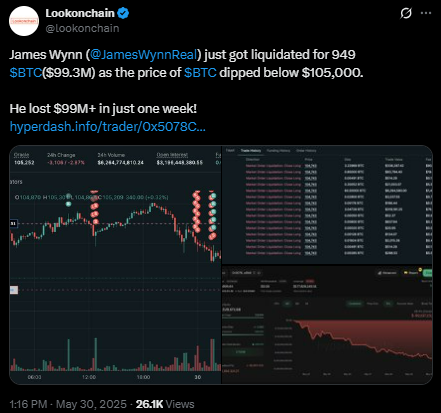
From a $1B long position into asking for USDC donations in less than a week. Welcome to the crypto casino. Wynn was a whales' scapegoat. Was expecting some real ⛽️💡 from whales at Bitcoin's key levels, but didn't picture this circus between Musk and Trump.
Their little beef sent cryptos down hard. Somebody's clearly selling, and it's not retail. Retail doesn't sell. Retail holds and prays. It's whales unloading. Which means they're all playing for the same team behind the scenes — part of the Bitcoin cabal orchestrating exits while the herd believes in "organic PA" and "fair markets."
If the real market makers are selling, it's definitely not to get back in after a 10% drop.
They also short, and their timing is better than everyone else's, for obvious reasons.
Before vs After:


Beeple vs Eric Trump


Why is Eric Trump getting praised for a trash ETH call while no one's mentioning Beeple's perfectly timed bottom call? It comes down to narrative control, influence bias, and agenda alignment. Accuracy rarely wins over influence in the short term, but the receipts always speak louder in the long run.
Pretending to make mistakes
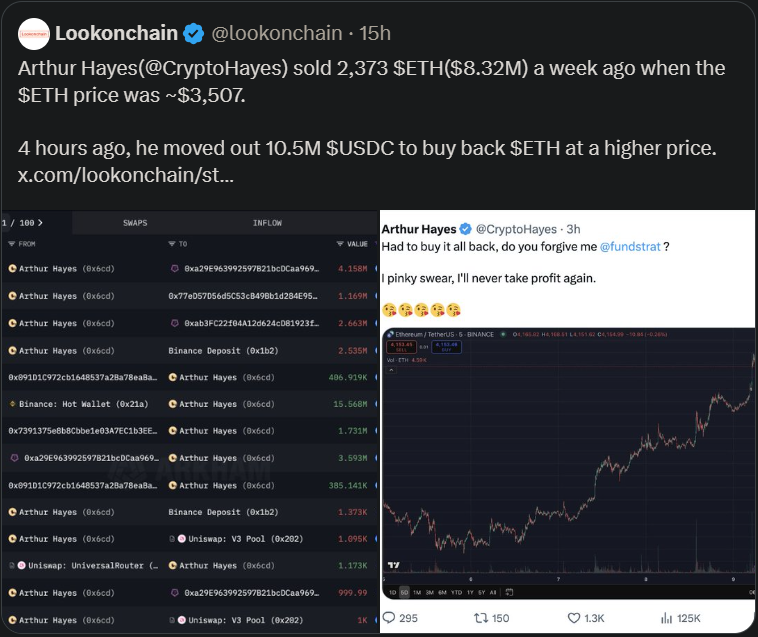
Pretend to make 'mistakes' so you seem just like everyone else, and deny having access to the private intel only whales see.
And now people are preconditioned so once he sells again, no one will believe it might be another crash coming.

This post is evidence they preach about long-term while deliberately triggering short-term wipeouts. Retail's desperate, risking more than ever, and whales know this. That first viral ETH tweet wasn't insight — it was a calculated nuke that liquidated every overleveraged long. Now, running victory laps:

Beeple again, and the "weird image guy" lesson
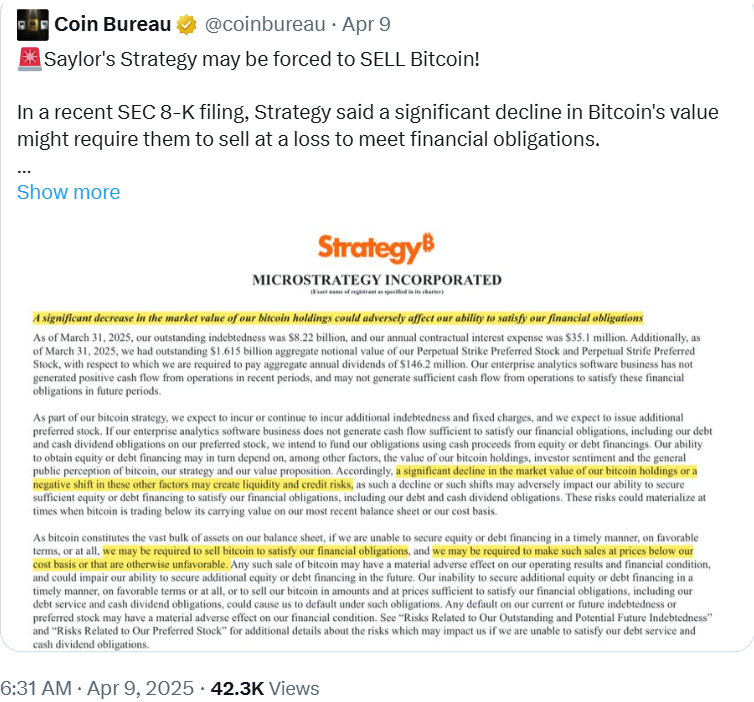
Check Bitcoin's chart on April 9th. Hilarious.
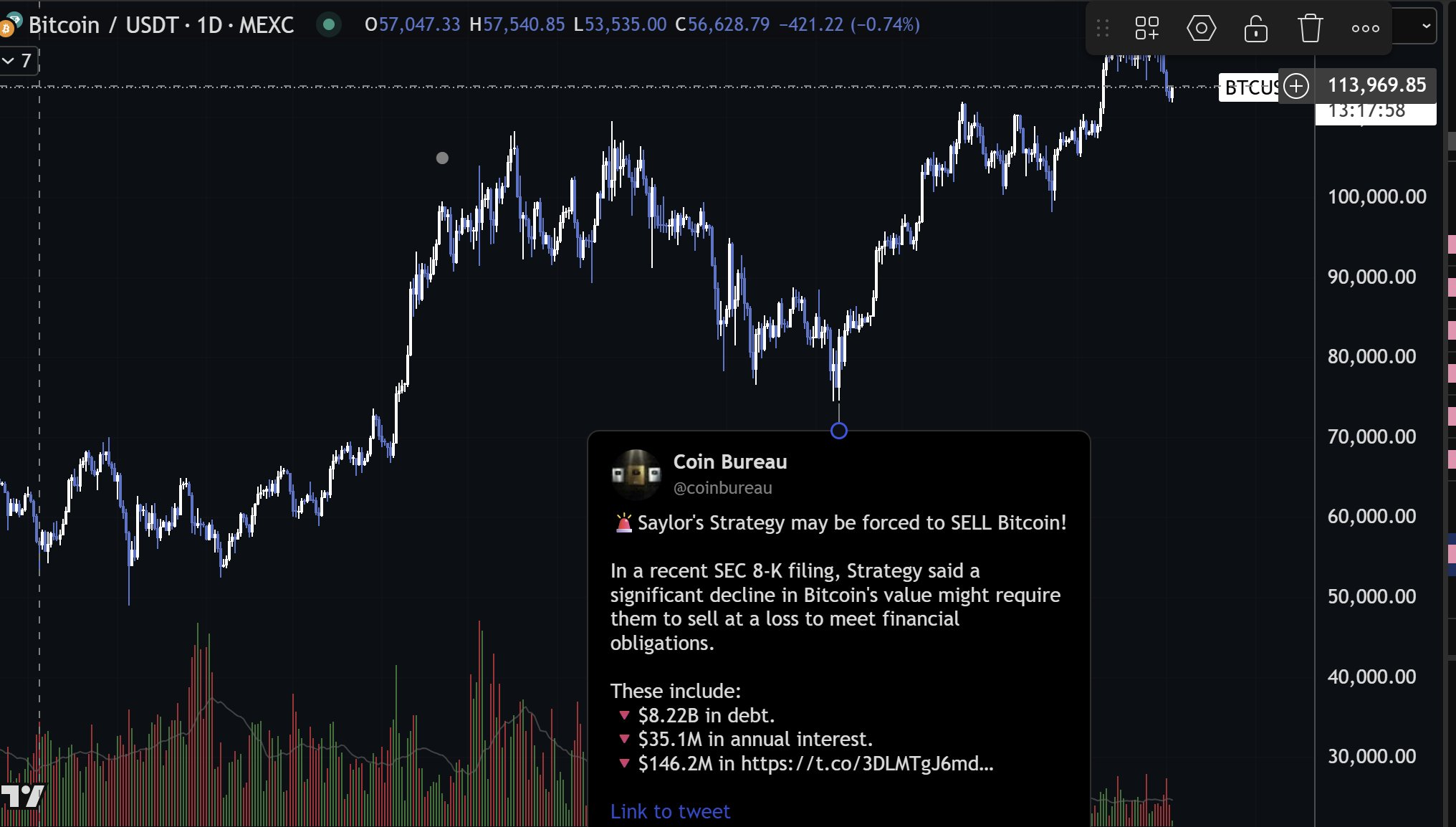
Beeple is that friend everyone mocks as a 'nerd' while he's actually warning to save their lives. Because his narrative doesn't fit the delusion they want reality to bend into, they dismiss him with "he just posts weird images." Meanwhile, he dropped the "ETH rising again" post at the exact bottom before ATH test, then posted "TOP SIGNAL" at the exact top before another aggressive bearish reversal.
Sam's account, FTT, scalp
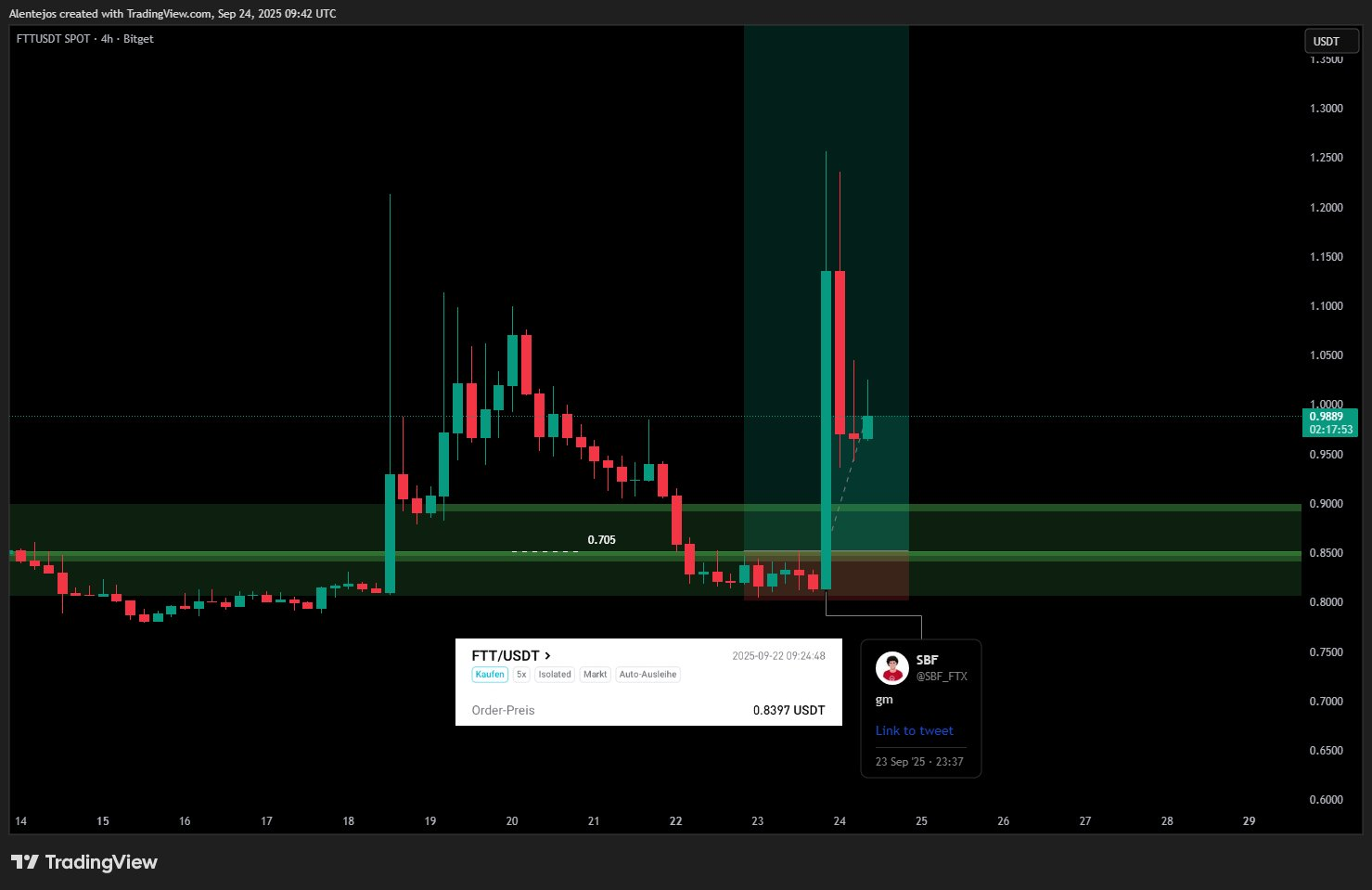
Saw the post from Sam's account. Looked at FTT's chart. Found a key level. Refined entry. Took a scalp size long. Did first TP after 10% upswing. Printing more while the herd's in analysis-paralysis.
One more layered chart
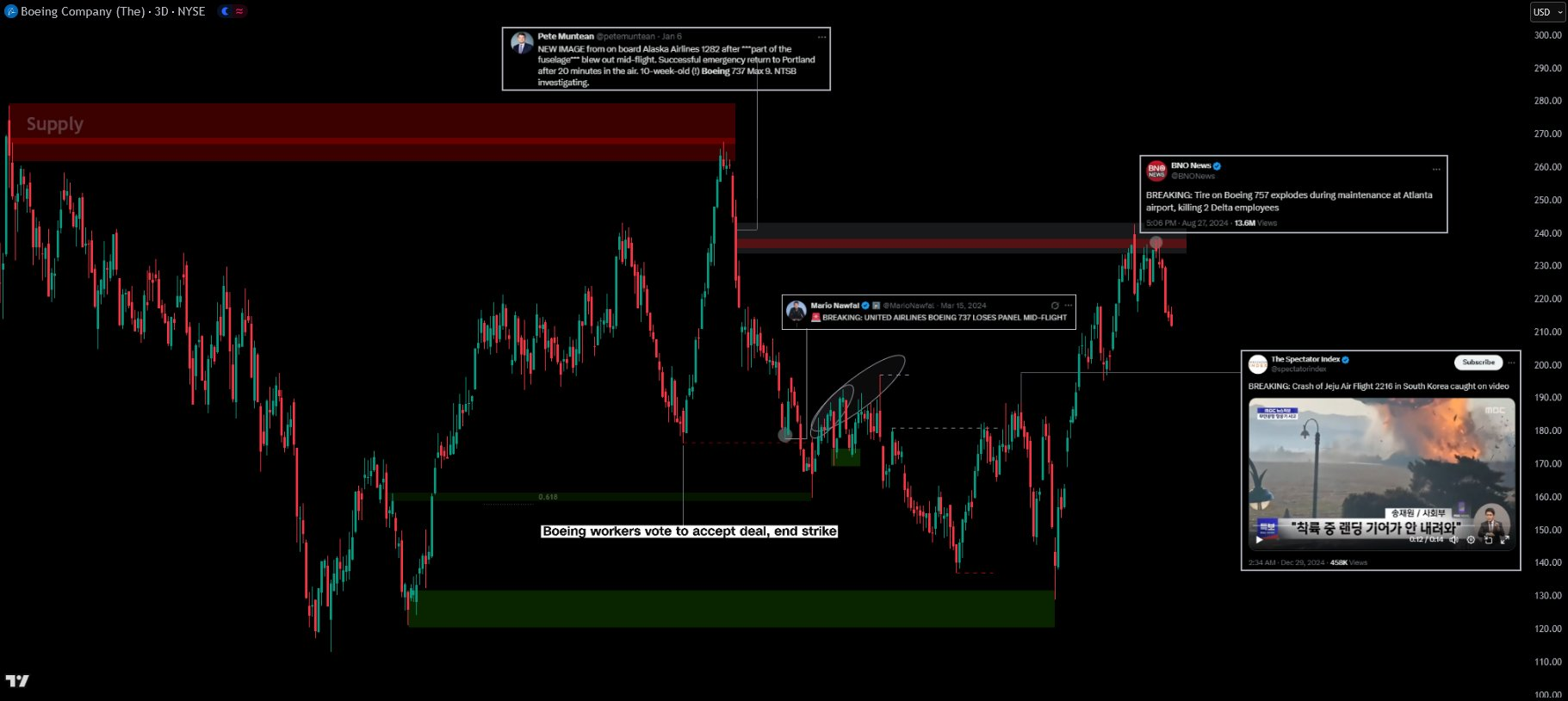
There's far more behind this chart and past PA than meets the eye. DYOR and you'll uncover layers most will never see. My message is simple: don't fly blind when at key levels. I don't make the rules. The world is what it is. Whales engineer everything — markets, narratives, even "random" events — if profit is on the line. For them, people are expendable. They call it "collateral damage" for a greater good.
Retail psychology: why the herd loses
This whole game only works because retail behaves predictably. Understanding how retail loses is half the path to not losing.
Panic selling is a fallacy. Retail doesn't panic sell — psychologically they cannot handle selling on a loss, big or small. They enter denial and hope. They don't sell on profit either, because it's never enough. They are exit liquidity.
Retail will always adjust to buy lower and always adjust to sell higher, so they never fill any significant orders and get REKT.
Retail doesn't have a target. Or they do — "to the moooooooon." Even if they have a 50x they will not sell, even if it was their target. Why? Greed/FOMO. Fear of seeing it go to the actual moon and missing millions. They bought at $1, raised target from $20 to $30 to $40, watched it crash to $10, refused to sell because "still profit," watched it go to $3, bought more at $3 (+200% from first entry), watched it bounce to $10, refused to sell at average $2 because "I saw it at $30," watched it bleed back to $2 — break-even on investment, then red. Started 2,000% up. Ended underwater.
It's a psychological game. The "necessity" of becoming rich quick keeps them broke forever.
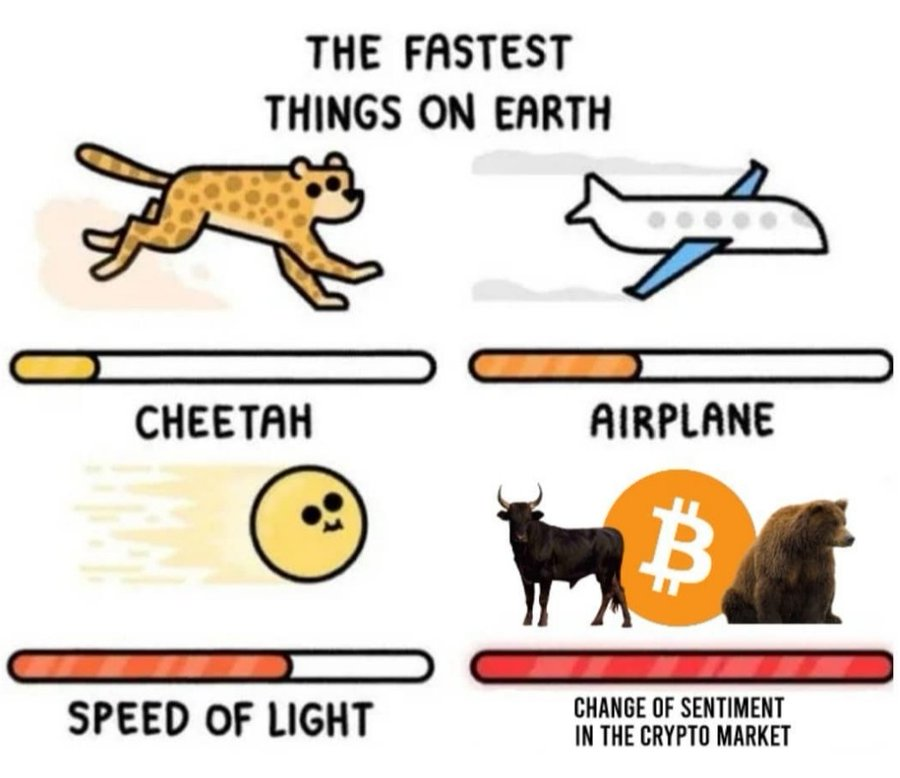
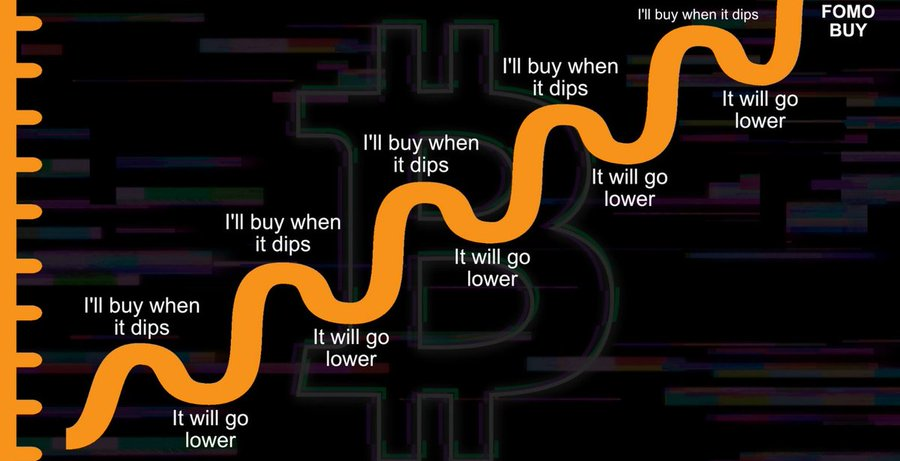
It often takes a portfolio drop of around -50% for uselessfluencers to suggest the bull run may be over — the same guys who are always claiming the bullrun hasn't even started. You won't sell because you "lost" a lot of gains and you want them back despite being on profit. This is greed.
Seeing their portfolio down significantly is why retail investors never sell, despite many still being on great gains percent-wise. They can't handle the thought of having paid so much back, so they hodl and hope.
The shitcoin diversification trap
You think it's smart to diversify across 30 different shitcoins to grow your blue chip bags faster. This is the exact opposite of smart. You erode your portfolio because there's barely any micro cap that doesn't crash hard, and you can't cut losses because you fear missing out.
Instead of stacking layers of knowledge, sharpening their skills, and mastering the game, the majority stack shitcoins that turn to dust — and sit there confused, wondering why they're broke. They chase hype instead of mastery. Illusions instead of calculated moves. Promises instead of proof. Knowledge compounds. Shitcoins don't. See Micro & Small Caps and Coin Narratives.
The shame cycle
'Should I buy now?!' from the same people who did absolutely nothing in the days leading up to the Titanic's anniversary, when the real signals were flashing in plain sight.
Was not early April that Binance was promoting margin trading to short too? 👀
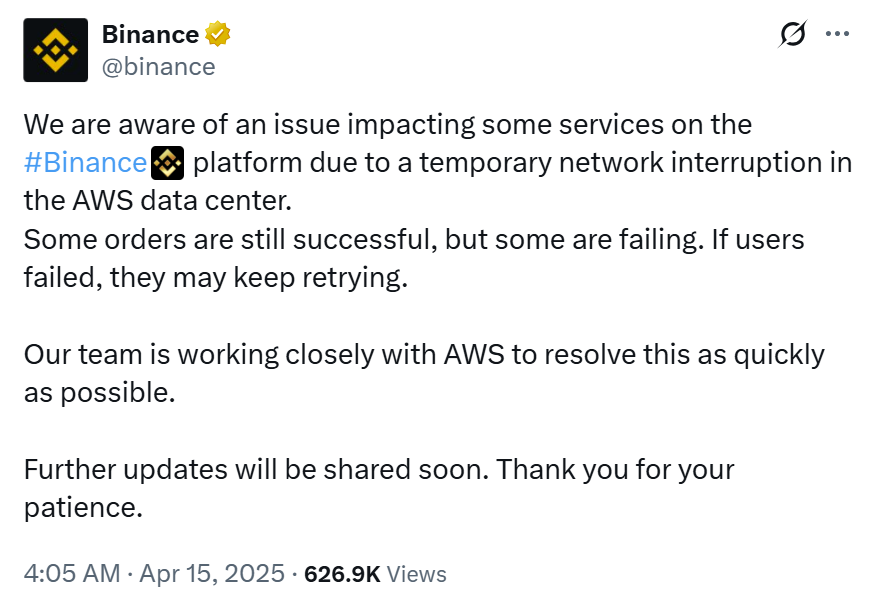
This isn't strategy. It's emotional trading. Insanity isn't doing the same thing over and over. Insanity is doing nothing when it matters most.
Bitcoin is up nearly 41,000% since but many still preach that the "super cycle" is coming.

It's obvious on CX, almost no one's actually trying to make money. They're all obsessed with being right. Targets keep getting bumped higher, feeding the ego until the market humbles them again. And when it does, they'll be wrecked regardless of paper "gains."
Most of them were already obliterated earlier this year, with shitcoins. That's the part they'll never say out loud.
Complete annihilation
When they lose badly enough, the sociopaths stop analyzing charts and start praying I'm wrong. That's how you know they've lost the game and their grip on reality.
Complete annihilation on their futures accounts. Whales scammed retail again, they say. Maybe so. But ask yourself: why weren't they shorting? Why did they long extreme premium? Why didn't they sell when Ethereum became good tech again and hit macro supply? Why assume your longs are safe just because the liquidation level looks far away? They weren't victims of whales. Greed placed their entries. Ego held their positions, and denial sealed their fate. They wrecked themselves.

Whales don't want the average investor to learn how trading actually works. Because if they did, they might start winning. There's another layer too — shame. People mock and shame anyone who doesn't follow the path they chose for themselves. If you fail, they'll mock you harder. If you succeed, they'll say you were lucky. Or option three: they'll twist reality to try to get others to believe you're also losing like them.
Don't be the herd
This is why "don't follow the herd" isn't a vibe — it's a mathematical necessity. The herd is wrong by structural design.
Don't Be the Herd🐑 / Play Contrarian
Most dangerous thing in this space: herd consensus. The real truth is never found in consensus. If you blindly accept what the masses believe, you're not embracing truth — you're swallowing deception.
If everyone's looking at the 200 MA, why do you do the same as them? If everyone's looking for some random triangle pattern or stupid potato wedge, why do you do the same? If everyone's looking at RSI and MACD crossovers, why? If everyone's placing stops above/below wicks, why?
Do you really think the real craft is what millions of people use, available for free on YouTube, or what they don't know about? When it's free, you're the product.
Always play contrarian
Always play contrarian if you want to win in investment markets. The herd is wrong 90% of the time.
Just important not to play a contrarian to contrarians, which is something I have noticed people doing. 1st herd plays contrarian to everything conspiracy theories say. 2nd herd plays contrarian to everything MSM says. It's important to reach the 3rd group and understand information is just information.
In this space, the loudest ones are always the same, and they're pretty bad at this game. There are millions of people playing this game in bigger markets, and many of those aren't on CX. I account for all those too. Otherwise, if I just went with the echo chamber here, I'd fall in every trap whales place.
Reverse psychology. Elites build "bullish" sentiment at tops and "bearish" at bottoms. When you see no FUD at all, please be fearful, for your own good.
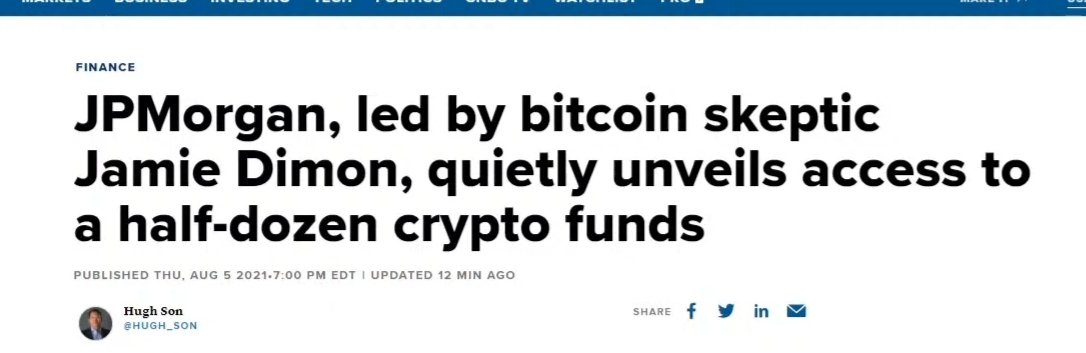
"Goldman Sachs gave 5 reasons why Bitcoin is not an asset class nor a suitable investment" — May 2020 (BTC @ $9,000) "Morgan Stanley is set to become the first major US bank to offer wealth management clients access to BTC funds" — March 2021 (BTC @ $60,000)
Same playbook, every cycle.
When consensus arrives, the trap is set
Consensus will fail, again. Because if it didn't, whales would bleed 12-figures into the hands of the herd they've been feasting on for years. They'll happily drop 11-figure breadcrumbs to spark euphoria — just enough for the herd to feel "early" — and then pull the rug right on schedule.
In markets, when the herd agrees, the trap is already set.
Market psychology isn't random. It's engineered. Once the herd expects a certain outcome because they finally found a multi-year pattern, it fails. The next time it happens, odds tilt toward the inverse. The real game is psychological warfare. Whales don't react. They design reactions, sometimes years in advance.
Final-stage deception
By late March, whales told you the Titanic was sinking. Some even declared: "I'll go down with this ship." People froze. Paralysis set in. Conveniently, certain platforms also began ❄️ withdrawals — exactly what you'd expect during a market breakdown, or so they wanted you to think.
That wasn't capitulation. That was preparation.
The "Titanic" narrative wasn't their surrender. It was the decoy. Reverse psychology at its finest. They'd spent months flooding the space with lies — up was down, greed was caution, strength was weakness. So by the time they finally told some semblance of truth, nobody believed them.
This is the final stage of deception: Tell the truth when it's too late for most to act on it. After months of fake breakdowns, misdirection, and synthetic fear, even a genuine liftoff signal is dismissed as "just another trap." Whales engineer disbelief. They want you skeptical when a strong reversal begins.
The trick is to figure out when they're signaling the truth or lying to your ass.
Psychological conditioning. After enough lying, they'll hit you with the truth and say "I told you so" right to your face. At some point you'll believe them again. You'll feel excited and relieved. You'll think this time is different. And that's when they'll wreck you, harder than before. The cycle: Lies → Truth → Trust → Destruction. Repeat. The majority never even notice. They just reload the hope and walk back into the trap.
When it becomes consensus that whales orchestrate narratives, eventually they'll stop lying — not because they found ethics, but because they no longer need deception. They've already trained the herd not to listen. They'll lay out exactly what's next with brutal clarity, and the majority won't believe them. Too damaged. Too paranoid to separate trap from truth. They'll miss the most profitable swings, the cleanest setups, the final lifeboat.
The retail "bag" graveyard
Most will lose all their gains because their targets are based on personal desire plus herd consensus instead of focusing on what the market is actually willing to give.
Many investors believe they can outsmart the market, aiming for 1000x returns. If such a scenario unfolded across the board, it would create an unrealistic number of new billionaires. Not realistic, unless the FED is ready to print another $10Tn.
Stop the "long term" thinking for your whole portfolio. You need to buy at cycle lows when everyone's scared and depressed, and sell at cycle highs into parabolas. Not round-trip.
This is why the HODL gospel is the perfect crowd control tool. They share this narrative that Bitcoin is the "Apex predator" and will be worth millions per coin. They want you to HODL. Isn't it clear they dump their bags hardcore? Don't just HODL like a fool — buy lower, sell higher. Do this for a long period and you'll achieve millionaire status. Bitcoin might achieve $1,000,000 one day, but when that day comes everyone will be a millionaire and the true purchasing power of $1m is likely the same as $100K-$200K today. See HODL is a Trap and Investing.
Spends months researching projects to invest in the quality ones — coins do nothing for years. Spends no more than 1 second to YOLO in memecoins — coin keeps pumping every day. This is why nobody trusts the space.
It's intentional. They want fresh money in waves. Older money is more experienced. The guys in charge upset old money so they sell on loss and leave, while bringing in fresh money that will eventually become old money → upset → leave. Cycle repeats.
Consumer loans/CC at an all-time high. They gave away "free $" and now people are digging holes deeper than ever. This is all planned. Avoid debt at all costs and increase your knowledge a little bit more every day. It'll pay off.
The $XRP example
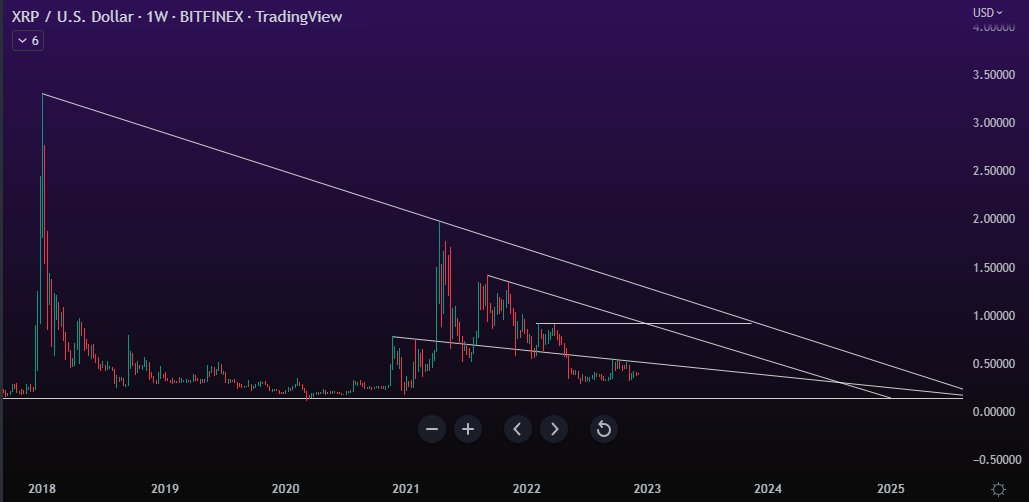
This shows where XRP is likely actually going. Nothing will moon like in 2021 anymore. Where is the dumb money coming from? They're not even given free $ anymore (furlough, stimulus). Trust in cryptos is much lower, plus they're broke. This belief that 100x runs will be a norm again will keep you broke. There are trillions in these markets — learn how to extract them.
When 99% of the market burns and vanishes, that money (and even more) will go to the very few who are actually legit and useful. Everyone's lying on the hopes they'll be right.
Over the last 2.5 years roughly $3 trillion moved into Bitcoin, ETH, and altcoins. Most are losing big.
It's not complicated: whales buy at extreme discount while deploying bearish news and unload at extreme premium while deploying bullish news.
Imagine playing a game where you fall for every single major trap and still think you can win it. Delusion at its peak.
The herd lost their money in shitcoins that died while whales have been positioning for turbulence. If in doubt, watch Gold and Silver PA.
How to trade like an institutional, not like retail
If retail loses by predictable behavior, institutionals win by structured behavior. So copy the structure. See Trade like Institutionals.
To trade like smart money, treat it as if you're running a business. Institutional traders do not rely solely on indicators like RSI and MACD. Each position is carefully calculated — timing, costs, execution.
The principles
1) Know your edge. Identify the advantage that sets you apart. A unique strategy, exceptional analytical skills, valuable information. Without a clear edge, your chances are limited.
2) Develop multiple plans with one goal. Have Multiple Plans📄 Create plans that cater to different market conditions, all geared toward one unified goal: consistent profitability. I come up with different potential outcomes and have a plan for each. Whichever outcome happens, I profit. Retail is only buying & holding — exactly what whales told them to do — and if you ask them what their targets are, either they don't know or they want unrealistic targets.
3) Review and learn. 🎮Game Isn't Linear / Play the Game🎮 / 🎓Learning Process. Continuously evaluate your trades. Analyze successes and failures and learn from them. Fail Better
The path to building this:
- Education. Invest time in learning markets, instruments, structure. ⭐What to Learn. Cut copy-trading. Stop chasing. ⚠️ Never Chase. Accumulate profits gradually over months to years and re-invest those profits in yourself. Buy knowledge.
- Strategy development. Build, back-test, tweak.
- Risk management. 👑Risk Management. Set appropriate stops, size positions to manage risk, maintain healthy R:R.
- Discipline — what most do not have. Stick to your plan. Emotional control is crucial.
- Continual improvement. Stay current, review, refine.
Three trading plans
Build a pre-market plan, an execution plan, and a post-market plan. Pre-market: how you identify setups with your edge and when to take action. Execution: guidelines for placing trades, managing risk, adjusting positions. Post-market: review performance, analyze winning and losing trades, identify improvements.
Embrace a learning mindset — recognize that you will always have losing trades. Always. Treat them as valuable lessons. It is normal to lose money while learning. You must lose to earn later. Over time you optimize your game and fail less.
Look around — everyone's gambling. If you do it right through the harder path, you barely have any competition, and all those people will keep losing money. To whom? If there's a loser, there's a winner. Be the winner. 🏆Win the Game
The whale mindset prompts
When you use any indicator, use this thought process: "Ok, this indicator is showing X, which means retail is thinking/feeling Y, because they rely heavily on indicators and consensus."
Then think as a Whale/MM:
- "How can I deceive as many retail investors as possible with the next moves?"
- "What can I print on the charts to make them feel bullish and then reverse price when they least expect it?"
- "What's the best move to stop, liquidate, or bring loss to as many traders as possible while profiting myself?"
- "How can I manipulate their sentiment so I can profit again?"
Market makers move the markets, not retail. Play against the herd sentiment and brainstorm potential outcomes that benefit whales rather than retail. The game will always play mostly to the whales' side.
Master the psychology of money/investing and you're sorted for life. Most others cannot see what I see. Build that mental framework, and you'll see the truth in this game.
Lastly: Where is most liquidity? Above CMP or below CMP? Master that one skill and you're sorted for life on any market at any time. 🌊Liquidity (+Wicks)
Find > Wait > Enter > Win
Everything above sets up the operational mantra of this curriculum. It's deceptively simple, and breaking it is the most common way students leak money.
Find > Wait > Play > Profit > Repeat.
1) Find the opportunity on the charts and set alerts near key levels. MOs for scalps, LTF, and MTF plays. LOs for HTF semi-optimal/optimal plays. There are no optimal opportunities if confirmations aren't found starting on the Weekly or higher timeframe, on a high-volume asset.
If your 🗝️ level is taken on a ⚡ wick across the board, pay attention to MTFs close. No candle bodies past your level = SL/liquidity hunting, likely to reverse aggressively. If there's a MTF candle body close past your level on alts, it is broken. Don't chase a reversal — find the next 🗝️ levels.
By the time you've entered, you should already know where the next opportunities sit and have clear TP levels. If you find an entry but can't find clear liquidity levels for profit-taking inside the MTF/HTF range, avoid it or momentum-trade with Trail Your SL. Think moves ahead. Have Multiple Plans📄
Stop refusing to be wrong. Embrace it. Being wrong is how you optimize. Fail Better
2) Wait for price to arrive at your level. Some hit tomorrow. Some next week. Some next month. Some in 6 months. Some never. Never chase.
3) Play without greed, with a well-structured plan for every trade.
4) Profit + manage your positions for guaranteed gains.
5) Repeat.
Never chase
If a plan fails, change the plan. Never change 🥅The Goal. Respect your stops. If they're taken, that's it. Don't add size or re-enter at random levels hoping to recover quickly — that's how most get REKT. 🚨The Worst Mistakes
What would be the 3 main things of technical analysis that you'd recommend to understand the real market?
- 🏅 Hidden liquidity through different TFs — 🎁Hidden Liquidity Levels
- Untouched liquidity (HTF/MTF bodies) — 🌊Liquidity (+Wicks)
- HTF Market structure — 🔷Premium & Discount / 🔷Break of Structure
Coin pumping? Retail's mindset: "Should I buy/long to catch the wave?" REKT. What you should do: find the levels where it can reverse. Never jump into a play without a plan. Find the 🗝️ levels, wait, and enter a reversal play, bullish or bearish.
Never chase positions already in play — mine or anyone's. Don't copy-trade what you don't understand. Don't chase fish; chase learning to fish.
Chasing means you weren't able to anticipate the move. You're late. Guessing direction isn't the hardest. The hardest is guessing when.
LTFs are not as reliable
BTC LTF. If you can't identify a strong enough level for price to reverse into, hold off. Quality over quantity wins.
When you are stopped and put another order at the same region again, isn't that chasing?
For me, no. I allow up to 2 or 3 touches of the same key level depending on the coin. Sometimes only one. Most of the time, a third touch warrants a smaller position size compared to the first. Chasing means entering a position after it has already moved away from the key level, even if it's heading where you anticipated.
Examples
A wise man once said: "When high volatility kicks in, be ready for the reversal, waiting at the right levels, and when those levels hit, you execute." Find → Set alerts → Wait → Enter → Win.
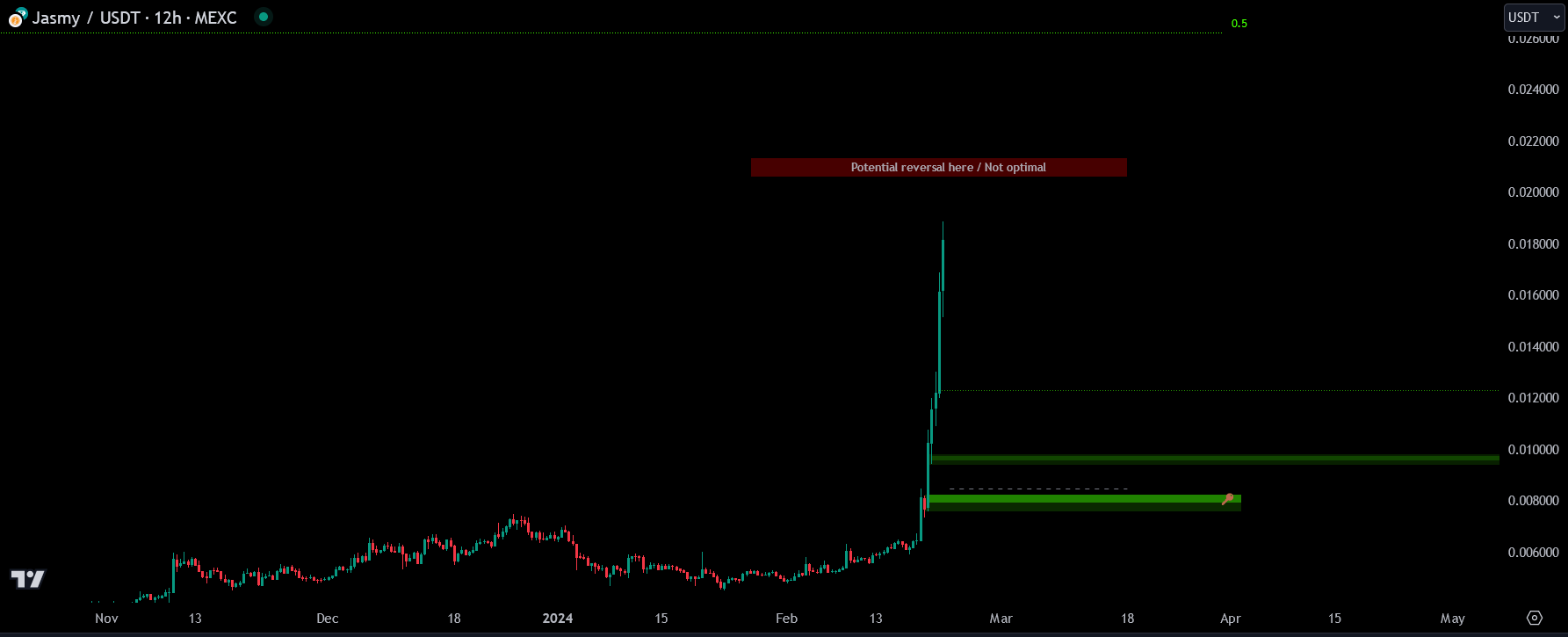
JASMY 200% pump out of nowhere — no chasing. You either were in before the 💥 or you missed out. Find potential reversal levels instead.
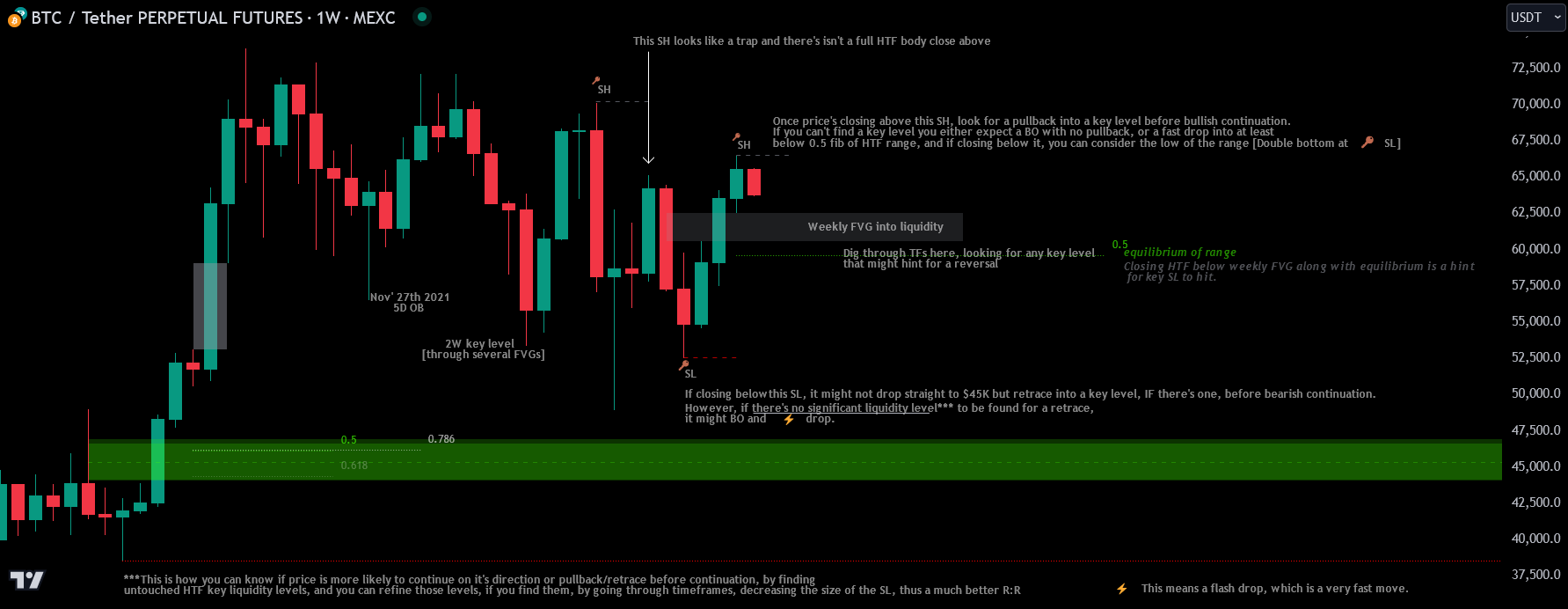
Bitcoin HTF analysis sequence:
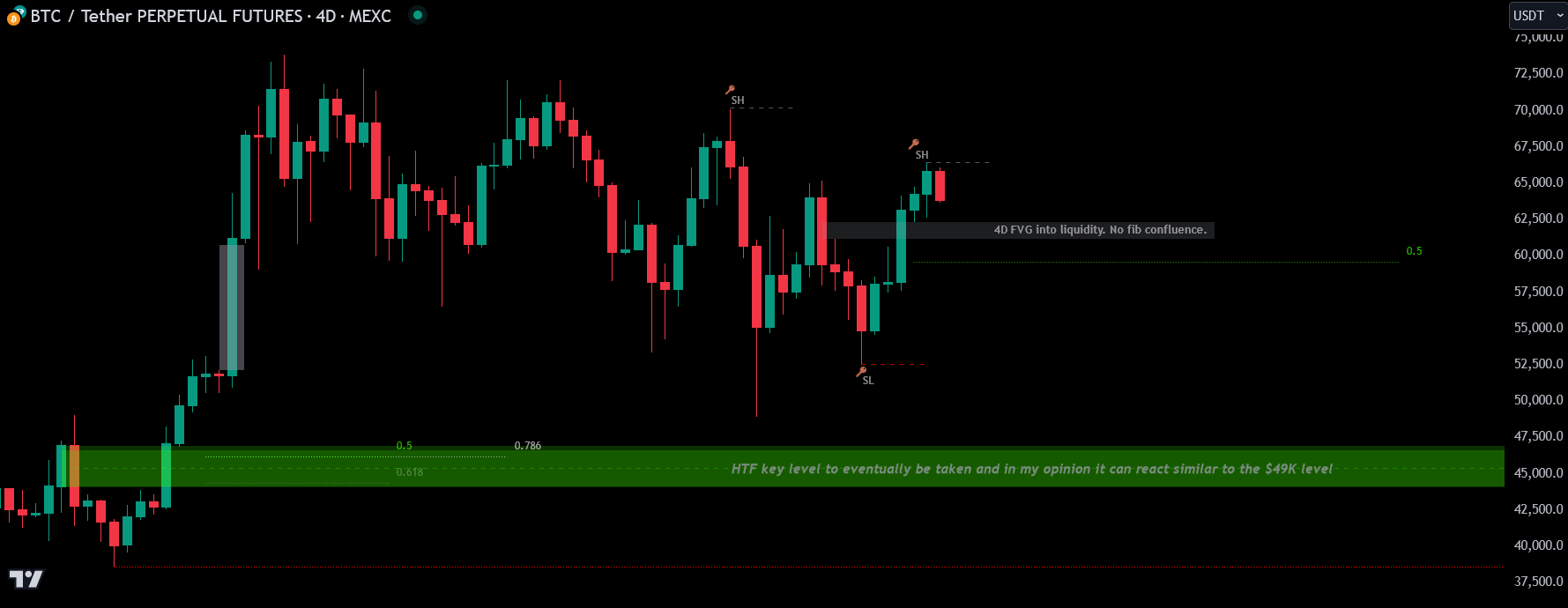
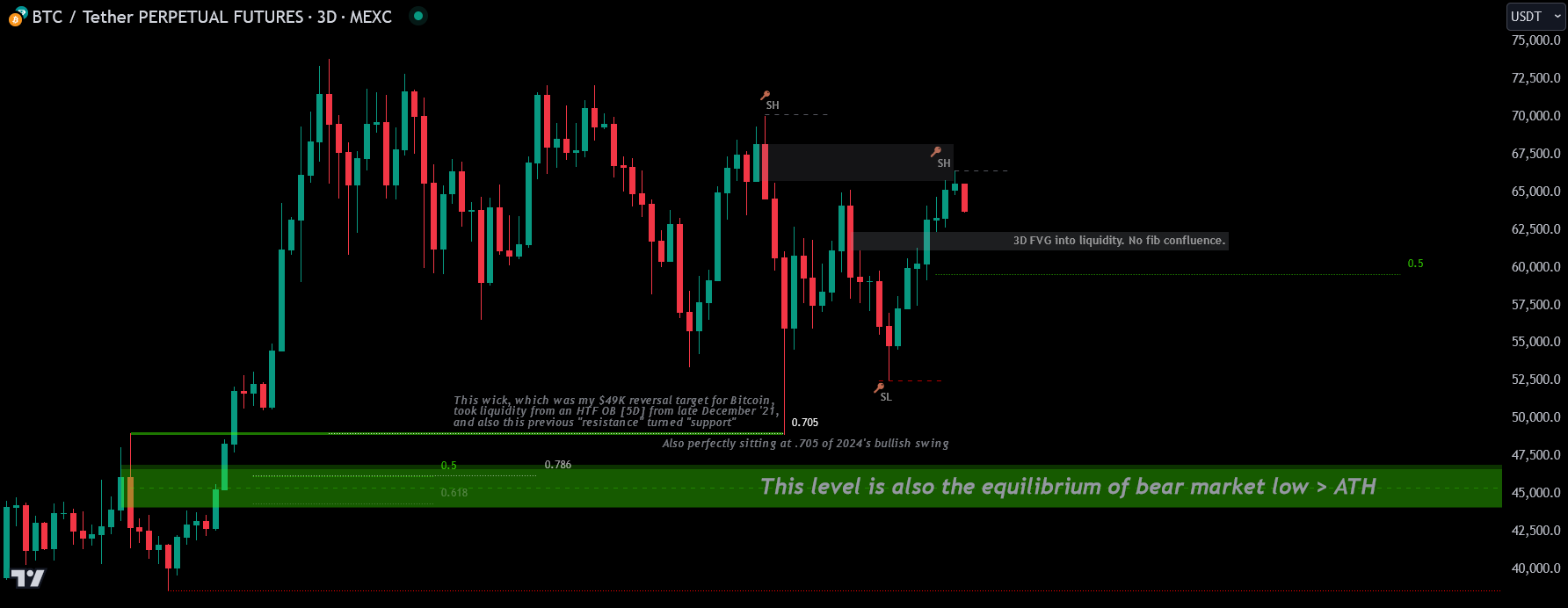
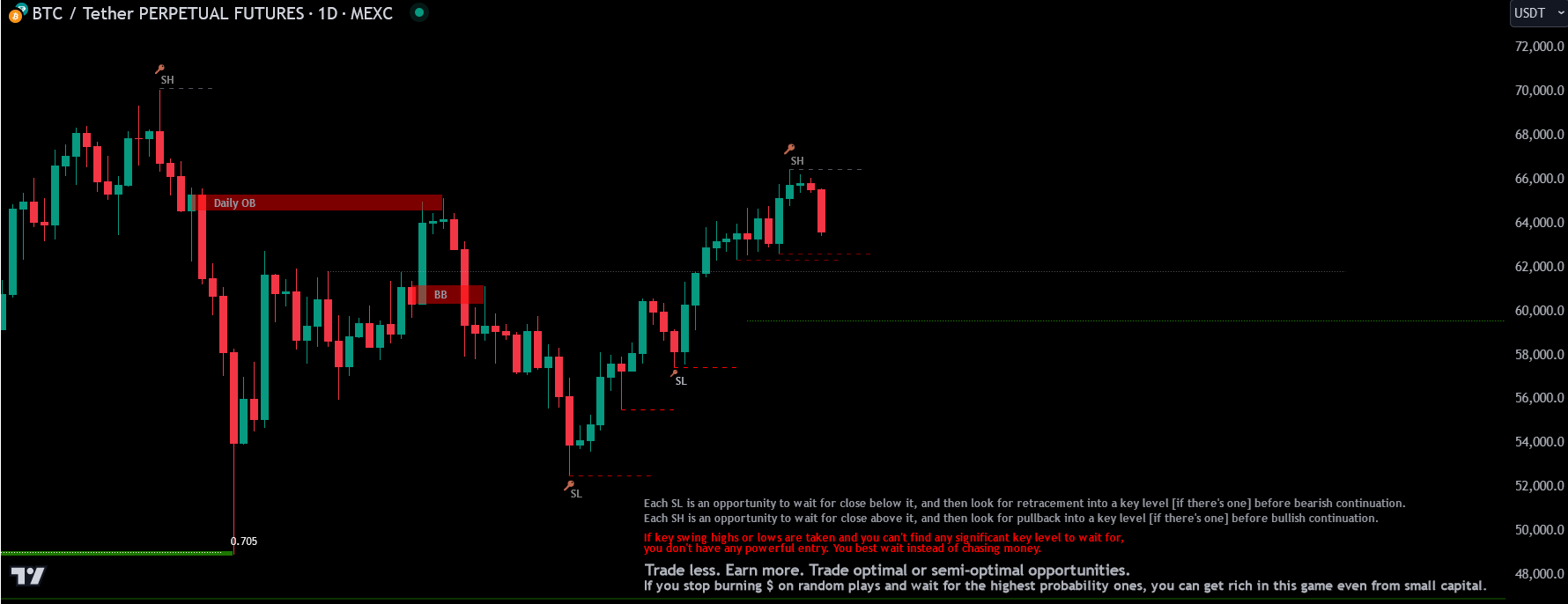
How do you have the patience to wait to get in trades?
I don't need to be overly patient unless we're talking about a single, isolated opportunity. In this game, there are countless opportunities. Some hit today, some tomorrow, some next week, next month, next year. Stop staring at your P&L every five minutes — even if profitable, it drains your energy and triggers unnecessary emotions. Focus on the plan in each trade, if you have one.
Quality over quantity wins the game.
Closing the loop: knowledge is freedom
The space is mostly frauds. Not just because they're always wrong and often rug-pulling their followers, but because they've never once spoken a word that resembles the mindset of someone actually successful in this game. They recycle the same garbage every week, hopium-fueled takes, praying the market goes up to save their flawed theories. They're loud, confident, completely lost.
If you're lucky enough to find real knowledge (like this course), cancel your distractions, shift your routine, and get obsessed. The knowledge dropped here isn't just alpha — it's freedom. Ignore it and you're not just choosing poverty. You're walking toward irrelevance and extinction. Your survival depends on who you choose to learn from.
Whatever Elites say publicly, for the whole society to become aware of, ignore. It's a trap 100% of the time. This includes the Elon Musk TA reads, the Beeple decoys, the Saylor announcements, the CZ tweets, the celebrity sponsorships, the Forbes "would" headlines, the Trump dates, the Roaring 20s hopium, the BTC Predictions bull-cycle "super-cycle" myths, the The Ross Ulbricht indicator 🪄, Elon's Elite Plan, and every other narrative plant designed to walk you into The Biggest Traps.
It applies to the SEC, to Hacks, to Black Swan events that are anything but black swan when you've been watching the choreography long enough, to FUD cycles, Pump & Dump cycles, Death Spirals in fading narratives, to 📅Market Events (Reoccurring) where the same setup runs over and over.
The whole chart prior to 2020 was preparation for the true HTF mania-phase from 2021 onwards. There's not even close to the same audience now, and whales can take years to build traps and beliefs. The longer the trap takes, the bigger the wreckage. The more dollars get pumped into the markets, the bigger the elites-induced event crafted to drain them later. Liquidity in → narrative out → wealth transfer complete.
In manipulated systems, major global events aren't always random. They're often the excuse the system uses to justify the inevitable crash it already planned. It's a double-edged sword: one side prints money, while the other takes it back, violently.
What you do with this
You don't have to convince anyone. You won't. The herd isn't ready. Their portfolios will tell them the truth eventually, and even then most will blame everyone but themselves.
Your job is simpler:
- Accept that bots run the markets, that Algos🐋 are programmed with fibs and respect 🎁Hidden Liquidity Levels, and that the news is the alibi, not the cause.
- Think like a whale, not like a retail trader.
- Find > Wait > Enter > Win. Never chase.
- Build Have Multiple Plans📄 for every scenario. Don't fall in love with one outcome.
- Use stops. Trail them. Take profits in stages.
- Decode Narratives before they peak, not after they wreck you.
- Learn the real toolkit — 🎁Supply & Demand, Wyckoff Method, 🔷Fibonacci Levels, FVGs, Ranges, ♨️Key Levels🗝️, 🌊Liquidity (+Wicks) — and forget the Retail TA Patterns and Retail Fail Charts the herd worships.
- Keep a 📝Journal. Connect the dots over time. Patterns emerge.
- Don't FOMO. Don't HODL like a bag-holder. Don't deploy leverage without understanding the structure of the trap around you.
This is a psychological game first, a technical game second. Master the psychology of money and investing, and you're sorted for life. Build the mental framework laid out here, and the rest of this curriculum has a foundation to stand on.
The herd will keep losing. Whales will keep building on steroids. Markets will keep being engineered. The script doesn't change — only the actors and the headlines.
You either decode the game and play alongside whales, or you stay in the rat race forever, trapped in FOMO, Greed, fear, waiting for a Roaring 20s that arrives for someone else.
Choose. And then lock in.